Tesla Model Y vs Hyundai Ioniq 5 vs Kia EV3/EV6 vs BYD Atto 3/Seal vs BMW i4/iX: The Complete 2026 Electric Vehicle Comparison
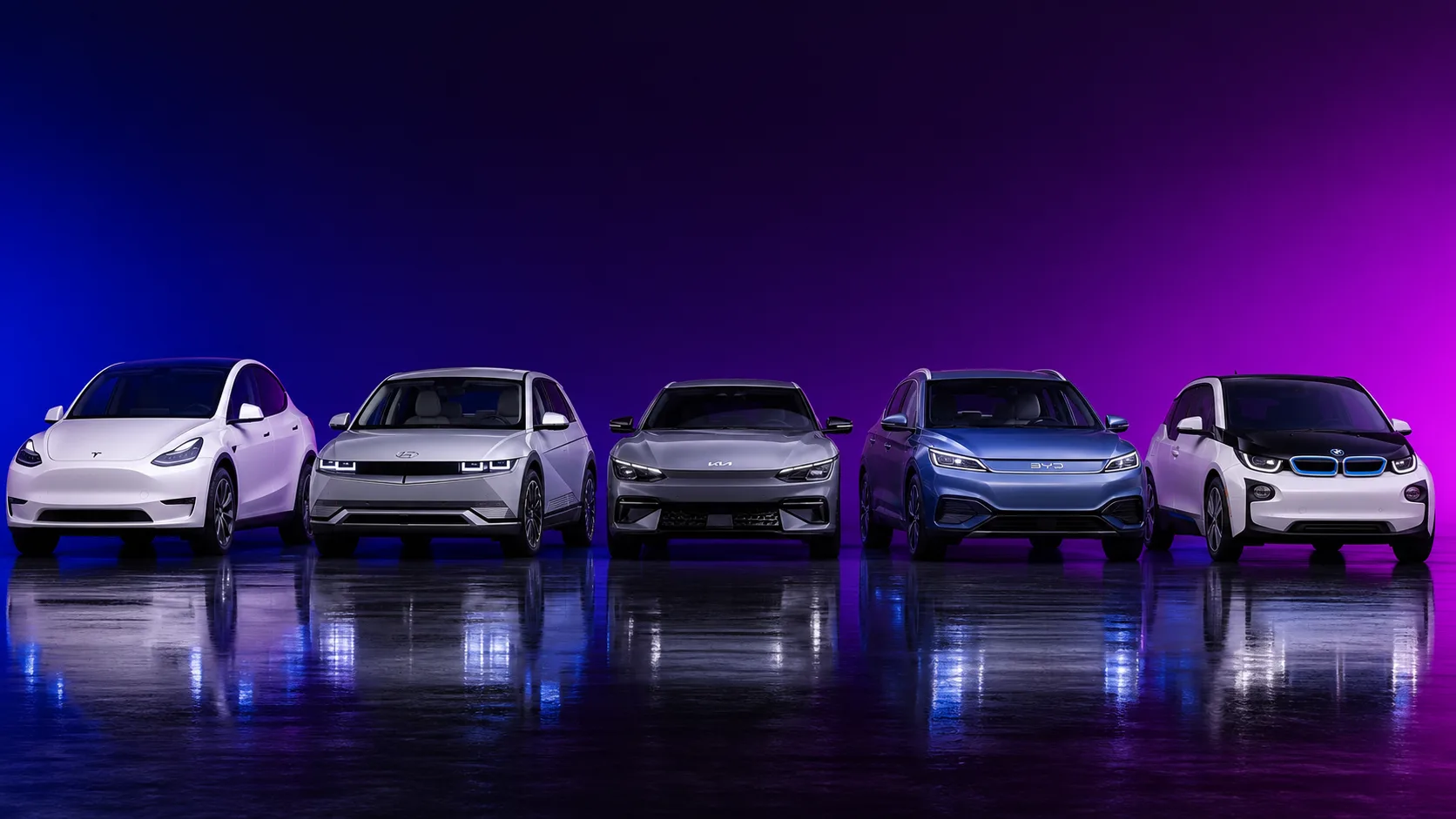
As of August 2026, roughly one in every four new cars registered in Korea is electric — which means comparing electric vehicles is no longer a hobby reserved for early adopters. According to The Electronic Times (a Korean IT/electronics trade newspaper), cumulative EV registrations in Korea hit nearly 200,000 units in the first half of 2026 alone, closing in fast on hybrids. The problem is that there are now almost too many options to choose from. In the domestic mainstream segment, Kia’s EV3/EV6 and Hyundai’s Ioniq 5/6 are locked in a fierce rivalry, while in the imported-premium segment Tesla’s Model Y/Model 3 hold an overwhelming lead, with BMW’s i4/iX and BYD’s Atto 3/Seal both pushing hard from just below.
This electric vehicle comparison doesn’t just recycle numbers lifted from YouTube reviews or reblogged posts. We treat a figure as confirmed fact only when it’s cross-checked against Kia, Hyundai, and BYD’s official pricing pages, Namu Wiki (Korea’s largest crowd-sourced wiki), and reporting from outlets like The Electronic Times, Herald Business, ZDNet Korea, and The Elec (a Korean battery/EV trade publication) — anything sourced from a single outlet or of unclear origin is flagged clearly as “unconfirmed” or “low-confidence.” We also call out real-world traps like the one from July 2026, when Tesla Korea hiked Model 3 and Model Y prices by as much as KRW 7 million (~$5,000) right after being named an approved recipient of a government subsidy — proof that “getting the subsidy” doesn’t automatically mean “paying less in the end.”
What follows starts with a full comparison table of all five EVs, then moves into a deep dive on each model’s key features, battery/charging/range benchmarks, a complete price and subsidy comparison, recommendations by user type, practical tips and common mistakes, and an FAQ — all in order. The right answer here depends heavily on your budget and lifestyle, so don’t just glance at one table and call it done; find the section that actually applies to you.
1. Executive Summary: The August 2026 Electric Vehicle Comparison at a Glance
For prospective buyers short on time, here’s the essential information on all five EVs compressed into a single table. Note that we weren’t able to obtain an official Korean price sheet for the BMW i4/iX during this research, so a number of fields for it are marked “unconfirmed.”
📊 The Complete August 2026 Electric Vehicle Comparison Table
| Category | Tesla Model Y/3 | Hyundai Ioniq 5/6 | Kia EV3/EV6 | BYD Atto 3/Seal | BMW i4/iX |
|---|---|---|---|---|---|
| Core design philosophy | Software-first, OTA updates and self-driving | World-first mass adoption of 800V ultra-fast charging | Value pricing and a broad lineup for Korea’s mainstream EV market | LFP Blade Battery tackling safety and price at once | Premium electrification from a legacy combustion-engine brand |
| Latest version | Juniper facelift (2025 model year onward), Model Y L six-seater | The New Ioniq 5 (facelift), Ioniq 5 N | EV3 (2026 model year), EV6 (2026 model year price cut) | Atto 3, Seal | i4 (eDrive40, M60), iX (xDrive45, xDrive60, M70) |
| Battery chemistry | RWD = LFP (CATL); Long Range/Performance = NCM (LG Energy Solution/Panasonic) | NCM-type cells (produced by SK On, assembled into modules by Hyundai Mobis) — whether any LFP trims exist is unconfirmed | EV3 = NCM(A) (Indonesia’s HLI Green Power for domestic units, CATL for China-bound units); EV6 = lithium-ion (84/63 kWh) | LFP (Blade Battery) across every trim | Unconfirmed (industry consensus assumes NCM-type cells) |
| Starting price in Korea (est., after tax breaks) | Model 3 RWD from KRW 46.99 million ( | Ioniq 5: KRW 47.4 million–59.15 million ( | EV3 GT-Line: KRW 48.95 million ( | Atto 3: from roughly KRW 33.5 million ( | Official Korean pricing unconfirmed (see separate US reference pricing) |
| Fast charging | Up to 250kW (capped at 170kW on Standard trim) | Up to 350kW (800V); roughly 18 min for a 10→80% charge (consistent across multiple official sources) | Multi-support for 400V/800V (specific kW not disclosed) | Seal: up to 150kW, ~25 min for 10→80%; Atto 3’s kW rating unconfirmed | Unconfirmed |
| Range | Korean-certified figure unconfirmed (US-spec reference: ~574km) | Korean-certified figure needs re-verification | EV3 Long Range: ~450km class; EV6: 494km | Atto 3: 321km combined (Korea-certified); Seal: 407km combined (Korea-certified) | Unconfirmed (overseas-spec iX cited at ~538km) |
| Self-driving/OTA | FSD v14 Lite (launched in Korea July 2026, US-built units only) | HDA2 (highway-focused driving assist) | Unconfirmed (details not disclosed) | Unconfirmed | Unconfirmed |
| Best suited for | Early adopters who prioritize software and self-driving features | Long-distance drivers who rely heavily on ultra-fast charging infrastructure | First-time EV buyers who want value for money and Korea’s domestic service network | Pragmatists who want LFP safety at a relatively lower price | Import-car buyers who prioritize brand prestige and driving feel |
The two rows that matter most here are battery chemistry and starting price in Korea. This is exactly why you shouldn’t approach EV shopping with the assumption that “they’re all basically the same.” Even within a single Tesla Model Y, the battery chemistry itself splits between LFP and NCM depending on trim, and there are brands like BMW where even the official Korean price isn’t clearly published. This electric vehicle comparison breaks down exactly these trim-level distinctions.
2. Deep Dive: Key Features of All Five EV Lineups
⚡ 1) Tesla Model Y/Model 3 — Software Defines the Car
- The Juniper facelift carries over into the 2026 model year: the new head- and taillamps, rear 8-inch display, and improved suspension introduced with the 2025 model year all remain in place, and the three-row, six-seat Model Y L, which launched in the US first, has also been confirmed as available in Korea.
- Korean pricing by trim (as of July 2026, after the surprise hike): Model 3 RWD is KRW 46.99 million (
$33,600), Model 3 Long Range is KRW 59.99 million ($42,900), Model 3 Performance is KRW 69.99 million ($50,000), Model Y Premium RWD (the highest-volume trim) is KRW 49.99 million ($35,700), Model Y Long Range AWD is KRW 66.99 million ($47,900), and the six-seat Model Y L is KRW 72.99 million ($52,100). These prices swing significantly, though, so always re-check the current figure on tesla.com/ko_kr before you buy. - National (central government) subsidy: KRW 1.68 million (
$1,200) for Model 3 RWD, KRW 4.2 million ($3,000) for Model 3 Long Range, KRW 2 million ($1,400) for Model 3 Performance, KRW 1.7 million ($1,200) for Model Y RWD, and KRW 2.1 million (~$1,500) for both Model Y Long Range AWD and Model Y L (local/municipal subsidies are separate and vary by region). - The battery is a completely different animal depending on trim: Standard/RWD trims use CATL-made LFP cells, while Long Range/Performance trims use NCM (nickel-cobalt-manganese) cells from LG Energy Solution (Panasonic for some chassis). This has been cross-reported by several Korean battery-industry outlets, including The Elec and The Electronic Times.
- FSD v14 Lite launched in Korea in July 2026, making Korea the second market worldwide to get it after North America — but only for Model 3/Y units actually built in the US (Texas or California). Units from Shanghai’s Gigafactory, which make up a sizable share of Korean sales, are excluded from FSD due to certification and regulatory issues — to the point that there have been reports of a class-action lawsuit from buyers who paid for the option but can’t actually use it. This is exactly why you need to confirm a car’s country of manufacture before you buy.
- Charging tops out at 250kW on Supercharger V3, though the Standard trim is capped at 170kW.
🔋 2) Hyundai Ioniq 5/Ioniq 6 — Bringing 800V Ultra-Fast Charging to the Mainstream
- The New Ioniq 5 (facelift) and the high-performance Ioniq 5 N are both on sale as 2026 model-year vehicles.
- Korean pricing by trim: Ioniq 5 Standard E-VALUE+ is KRW 47.4 million (
$33,900), Exclusive is KRW 50.3 million ($35,900), Long Range E-Lite is KRW 50.64 million ($36,200), Exclusive is KRW 54.5 million ($38,900), and Prestige is KRW 59.15 million ($42,300). The Ioniq 6 starts at KRW 48.56 million ($34,700) for the Standard trim. The Ioniq 5 N is sold as a separate high-performance trim, but we couldn’t pin down its exact price during this research. - The cells are produced by SK On and assembled into modules by Hyundai Mobis, and they’re understood to be NCM-type. Whether a separate LFP variant exists for entry-level trims, though, wasn’t something we could confirm — if the exact battery spec matters to your decision, it’s worth re-checking trim-by-trim on Hyundai’s official battery information page.
- Built on an 800V architecture, it supports ultra-fast charging up to roughly 350kW, and the figure of about 18 minutes for a 10→80% charge is consistent across enough outlets to be trustworthy. That said, a real-world test in Germany measured just 149kW at the 80% mark, so keep in mind that actual charging speed can vary a lot depending on state of charge (SOC) and outdoor temperature.
- Self-driving/OTA runs on the HDA2 (Highway Driving Assist) system, also used on the Ioniq 5/6 and the electrified Genesis GV60/GV70. It’s a highway-focused driving aid, and the industry consensus is that it doesn’t extend to urban self-driving the way Tesla’s FSD does.
🚗 3) Kia EV3/EV6 — The Real Leader of Korea’s Mainstream EV Market
- The EV3 lineup (2026 model year) consists of the Standard 2WD (150kW motor, 58.3kWh battery, roughly 350km combined range), Long Range 2WD (150kW motor, 81.4kWh battery, roughly 482km city/410km highway), and Long Range 4WD (195kW motor, 81.4kWh battery). The range-topping GT-Line trim is KRW 48.95 million (~$35,000) with green-vehicle tax breaks and the 3.5% special consumption tax rate applied.
- The EV3’s battery differs by production region: units built for the domestic (and international) market use NCMA (nickel-cobalt-manganese-aluminum) cells from Indonesia’s HLI Green Power plant, while units bound for the Chinese market use CATL’s NCM cells. The common explanation is that LFP is reserved for Kia’s cheaper lineups, like the Ray EV, while the EV3 sits in the NCM(A) camp — but since this claim traces back to what looks like a single source repeated elsewhere, it’s worth confirming against Kia’s official spec sheet before you rely on it.
- The EV6 got a KRW 3 million (~$2,100) price cut effective January 22, 2026 (per Kia’s official announcement). Trim pricing after tax breaks now runs: Light Standard KRW 43.6 million (
$31,100), Light Long Range KRW 47.6 million ($34,000), Air Standard KRW 48.6 million ($34,700), Air Long Range KRW 52.6 million ($37,600), Earth Standard KRW 52.6 million ($37,600), Earth Long Range KRW 56.6 million ($40,400), and GT-Line Long Range KRW 57.2 million (~$40,900). - EV6 battery: a 63.0kWh lithium-ion pack on Standard trims and 84.0kWh on Long Range, with a 400V/800V multi-fast-charging system across every trim. The specific kW rating and 10→80% charge time aren’t spelled out even on Kia’s official page, though, so those numbers are hard to pin down.
- There are reports that the Kia EV3 and EV5 rank near the top of Korea’s EV registration charts, but since the original sourcing often traces back to online-community reposts, it’s best to verify the actual rankings separately through official statistics — say, Carisyou Data Research Institute (a private Korean vehicle-registration data firm) or Korea’s official zero-emission-vehicle portal.
🔷 4) BYD Atto 3/Seal — Betting on LFP Batteries for a Practical Play
- The Atto 3 originally launched in Korea at KRW 31.5 million–33.3 million (
$22,500–$23,800), but reports indicate it’s since been raised to a starting price of roughly KRW 33.5 million ($23,900). The exact timing of the increase and the current official price both need re-verifying at bydauto.kr. - The Atto 3 uses a Blade (LFP) battery, available in 49.92kWh and 60.48kWh capacities — the version sold in Korea has been confirmed as the 60.48kWh pack.
- The Atto 3’s combined range, as certified by Korea’s Ministry of Environment, is 321km. Figures like 430km or 510km are sometimes cited under China’s CLTC standard, but CLTC and Korea’s certification methodology differ enough that for real-world planning purposes, you should treat 321km as the number that actually applies.
- The Seal starts at KRW 39.9 million (~$28,500), with the Seal Dynamic AWD trim at KRW 46.9 million (
$33,500) after tax breaks (before subsidies). Some outlets have also reported a price around KRW 38.21 million ($27,300), which puts the overall spread somewhere between KRW 38.21 million and 46.9 million (~$27,300–$33,500) depending on trim. - The Seal runs an 82.56kWh Blade (LFP) battery, with a Ministry of Environment-certified range of 407km combined at normal temperature and 371km combined in cold weather (a roughly 91.2% cold-weather retention rate). A “449km” figure that shows up in some sources may reflect different testing conditions, so it’s safer to treat 407km (combined) as the reference number.
- Seal performance: the single-motor RWD makes either 201hp/310Nm or 310hp/360Nm depending on trim, while the dual-motor AWD produces a combined 390kW (roughly 530hp) and 670Nm. Fast charging tops out at 150kW, taking about 25 minutes for a 10→80% charge.
🏁 5) BMW i4/iX — Premium Electrification Hidden Behind an Unconfirmed Korean Price
- We were unable to directly confirm official Korean pricing during this research. Access to the official bmw.co.kr pricing page was restricted, and every figure we found online was either an “estimate” or a value referencing US pricing. If you’re considering a purchase, you’ll need to confirm current Korean pricing yourself, either at bmw.co.kr or through a dealer quote.
- US reference pricing (not converted to KRW): the 2026 i4 comes in three trims — eDrive40, xDrive40, and M60 — priced from $59,075 to $71,875, all with an 81kWh battery. A new inverter has added up to 15 miles (about 24km) of range depending on trim.
- The 2026 iX lineup runs xDrive45 at $76,325 (a lower entry point than the previous generation), xDrive60 at $89,675, and M70 xDrive at $112,675. The xDrive45 makes 402hp with a 0-60mph time of 4.9 seconds, the xDrive60 makes 536hp, and the M70 makes 650hp. Overseas-spec iX range is cited at up to roughly 538km, though that’s not a Korean-certified figure.
- Battery chemistry is widely assumed to be NCM-type per industry consensus, but we couldn’t get primary official confirmation during this research.
- Fast-charging kW rating, 10→80% charge time, OTA policy, and self-driving level were likewise all things we couldn’t pin down with specific figures within the scope of this research. These are items you’ll want to check separately on BMW’s official spec page.
3. Battery, Charging, and Range: Head-to-Head Benchmarks
[As of August 2026 — electric vehicle comparison benchmarks, cross-checked figures only]
Hyundai Ioniq 5/6  : ⭐⭐⭐⭐⭐ Up to 350kW, ~18 min for 10→80% (confirmed across multiple outlets)
Tesla Model Y/3    : ⭐⭐⭐⭐☆ Up to 250kW (capped at 170kW on Standard trim)
BYD Seal           : ⭐⭐⭐☆☆ Up to 150kW, ~25 min for 10→80%
Kia EV3/EV6        : ⭐⭐⭐☆☆ Multi-support for 400V/800V (specific kW undisclosed)
BMW i4/iX : ☆☆☆☆☆ Fast-charging figures unconfirmed| Category | Tesla Model Y/3 | Ioniq 5/6 | EV3/EV6 | BYD Atto 3/Seal | BMW i4/iX |
|---|---|---|---|---|---|
| Battery chemistry | RWD = LFP (CATL); Long Range = NCM (LG Energy Solution/Panasonic) | Assumed NCM (whether an LFP variant exists is unconfirmed) | EV3 = NCM(A); EV6 = lithium-ion (assumed NCM) | LFP (Blade) across every trim | Assumed NCM (unconfirmed) |
| Ultra-fast charging | Up to 250kW (capped at 170kW on Standard) | Up to 350kW (800V) | Official kW undisclosed (400V/800V multi-support) | Atto 3 unconfirmed; Seal up to 150kW | Unconfirmed |
| Korean-certified range | Unconfirmed (overseas reference: ~574km) | Unconfirmed (needs re-verification) | EV3 Long Range: ~450km class; EV6: 494km | Atto 3: 321km combined; Seal: 407km combined | Unconfirmed |
The one thing this table lets us say with real confidence is that Hyundai’s Ioniq 5/6 lead the pack on charging-infrastructure maturity. Having brought 800V architecture to mass-market adoption arguably ahead of anyone else, the roughly 18-minute 10→80% figure has been confirmed repeatedly across multiple outlets. That said — as the 149kW reading from a German real-world test shows — actual charging speed can run slower than the spec sheet suggests depending on battery temperature, SOC range, and charger condition, and that’s true across every brand, not just one.
Tesla has an infrastructure edge in Supercharger network coverage and reliability, but the Standard trim’s 170kW cap means you shouldn’t just apply the “up to 250kW” figure across every trim. The Seal’s 150kW/25-minute numbers run a bit slower than the domestic brands or Tesla, but LFP batteries are generally credited with higher thermal stability, meaning less degradation from repeated fast charging in the first place. Kia’s EV3/EV6 and BMW’s i4/iX are both cases where we couldn’t obtain an official kW figure at all during this research — so if charging speed matters to your decision, ask a dealer directly for real-world measurements before signing anything.
On range, what stands out is that BYD is the only brand of the five to clearly publish its Ministry of Environment-certified combined figures (Atto 3 at 321km, Seal at 407km). Tesla, Hyundai, and BMW, by contrast, only turned up overseas-spec numbers or figures that need re-verification — which doesn’t mean these cars actually lack Korean certification, just that we couldn’t confirm it within the scope of this research. Before making a final decision, be sure to look up the Korean-certified range table on each manufacturer’s own official site.
4. Complete Price and Subsidy Comparison
[Sorted by starting price in Korea — estimated after tax breaks, as of August 2026]
BYD Atto 3      : from ~KRW 33.5M (~$23,900)
BYD Seal        : KRW 38.21M–46.9M (~$27,300–$33,500)
Kia EV6         : KRW 43.6M–57.2M (~$31,100–$40,900) (cut by KRW 3M on 2026-01-22)
Hyundai Ioniq 5 : KRW 47.4M–59.15M (~$33,900–$42,300)
Hyundai Ioniq 6 : from KRW 48.56M (~$34,700)
Kia EV3         : up to KRW 48.95M (~$35,000) (GT-Line)
Tesla Model 3   : KRW 46.99M–69.99M (~$33,600–$50,000) (after the July 2026 hike)
Tesla Model Y   : KRW 49.99M–72.99M (~$35,700–$52,100) (after the July 2026 hike)
BMW i4/iX       : Official Korean pricing unconfirmed (US reference: from $59,075)
💰 The Essentials of Korea’s 2026 EV Subsidy Program
| Category | Details |
|---|---|
| National subsidy cap | Up to KRW 5.8 million (~$4,100) for passenger vehicles |
| 100% payout tier | Vehicle price under KRW 53 million (~$37,900) |
| 50% payout tier | Vehicle price KRW 53 million–85 million (~$37,900–$60,700) |
| Excluded from payout | Vehicle price KRW 85 million (~$60,700) or above |
| Trade-in incentive | Up to an extra KRW 4 million (~$2,900) for scrapping and replacing an old combustion-engine vehicle (a separate track — how exactly it interacts with the KRW 5.8 million cap is described inconsistently across sources and needs verification) |
| Local (municipal) subsidy | Paid separately based on regional budgets and residency requirements — not a nationally uniform amount |
The most practical trap in this electric vehicle comparison is that getting a subsidy can actually leave you paying more in the end. In July 2026, right after Tesla Korea was named an approved recipient for the government’s (the Ministry of Climate, Energy and Environment’s) second-half subsidy program, it hiked Model 3 and Model Y prices by as much as KRW 7 million (~$5,000). That’s a fact cross-confirmed by both ZDNet Korea and Dailian, and it leads to a very practical tip: signing your contract within days of a subsidy announcement can genuinely be the difference-maker.
Your actual out-of-pocket price varies a lot depending on where you live and which trim you pick, so the figures in the tables above are strictly reference points. For your real final cost, check Korea’s official zero-emission-vehicle portal (ev.or.kr) or your local municipal government’s notice. This matters especially for models like the BYD Atto 3 and Seal, which advertise entry prices in the KRW 30-million range (~$21,000–$28,000) — once you factor in the local subsidy on top, the real purchase price can end up close to that of a domestic compact combustion-engine car, so if you’re chasing that price bracket, it’s worth also checking how soon your local government’s subsidy budget is likely to run out.
BMW’s i4/iX is the one brand in this electric vehicle comparison for which we couldn’t obtain an official Korean price. If you just convert the US reference price (from $59,075) straight into won and budget off that, you’ll be ignoring tariffs, certification costs, and dealer margin — and your real quote could come in far higher. Get an actual Korean dealer quote first, then compare it against the other four brands.
5. Final Recommendations by User Type
🎯 1) Early Adopters Who Prioritize Software and Self-Driving Features
- Best pick: Tesla Model Y/Model 3
- Why: FSD v14 Lite launched in Korea in July 2026, putting Tesla ahead on software maturity. Just remember it only applies to US-built units, so confirm the car’s country of manufacture before signing.
🎯 2) Frequent Highway Long-Distance Drivers Who Want to Minimize Charging Wait Time
- Best pick: Hyundai Ioniq 5/Ioniq 6
- Why: Built on an 800V architecture with up to 350kW ultra-fast charging and roughly 18 minutes for a 10→80% charge, this is the most reliably confirmed charging performance of all five options.
🎯 3) Practical Buyers Getting Their First-Ever EV Who Want Korea’s Domestic Service Network
- Best pick: Kia EV3
- Why: A mainstream model that competes near the top of Korea’s registration charts, with an entry point around KRW 48.95 million (~$35,000) for the GT-Line — plus full access to Kia’s nationwide service-center network.
🎯 4) Value-Focused Buyers Eyeing Their First EV on a KRW 30-Million Budget (~$21,000–$28,000)
- Best pick: BYD Atto 3
- Why: A Korean starting price of roughly KRW 33.5 million (~$23,900) makes it the lowest entry point of all five, and its LFP Blade Battery carries relatively strong confidence around fire safety. The 321km Korean-certified range, though, might leave long-distance drivers wanting more.
🎯 5) Mid-Size-Sedan Shoppers Who Want Both Generous Range and Performance
- Best pick: BYD Seal
- Why: 407km combined range (Korea-certified) and roughly 530hp on the dual-motor AWD, all while holding a price around the KRW 40-million mark. Once you factor in that its 150kW fast-charging runs a bit slower than the domestic brands or Tesla, it’s still an appealing value pick in the mid-size-sedan segment.
🎯 6) Import-Car Buyers Who Prioritize Brand Prestige and Driving Feel
- Best pick: BMW i4/iX (confirm official Korean pricing beforehand)
- Why: There’s a genuinely performance-oriented lineup here — the US-spec iX xDrive60 (536hp) and M70 (650hp), for instance — but official Korean pricing, battery specs, and charging specs weren’t things we could confirm during this research. Getting a dealer quote and the official specs directly, before signing anything, is non-negotiable here.
6. Practical Tips and Common Mistakes
✅ Tip 1) A Subsidy Confirmation Can Actually Be the Cue for a Price Hike
Just like the Tesla Korea case in July 2026, automakers sometimes raise prices right after being named an approved subsidy recipient. Before you rush into “the subsidy’s coming, better sign now” mode, get in the habit of first checking news coverage for any price changes over the past three months.
✅ Tip 2) Check Battery Chemistry (LFP vs. NCM) at the Trim Level
Even within a single Model Y, RWD runs LFP while Long Range runs NCM — genuinely different batteries. LFP is generally cheaper and safer against fire, but the common consensus is that it lags NCM on cold-weather performance and energy density. If winter range loss worries you, make sure to check each trim’s battery chemistry against the official spec sheet.
✅ Tip 3) Lean on a Map App for Charging-Station Searches
Unlike a gas car, checking charging infrastructure is a mandatory piece of research before you buy an EV. To check real-time charger congestion and whether a station is slow or fast charging, take a look at our comparison of Naver Map, KakaoMap, TMAP, and Google Maps and settle on the app that fits your own driving patterns first.
✅ Tip 4) Don’t Mix Up Korean-Certified Range with Overseas Specs (CLTC, EPA)
As with the BYD Atto 3 — 430-510km under China’s CLTC standard versus 321km under Korea’s Ministry of Environment certification — the exact same model can show wildly different numbers depending on the testing standard. Treat range figures from overseas forums or YouTube reviews as reference only, and base your actual usage plans on the Korean-certified number.
✅ Tip 5) If You Use AI to Research Specs, Double-Check That the Answer Is Actually Current
EV specs and prices change on a scale of months, so whatever an AI chatbot tells you might just reflect stale, training-cutoff information. Check whether the model actually has live web search in our comparison of ChatGPT, Claude, Gemini, and other AI models, and always cross-verify final prices and specs against the manufacturer’s own official page.
✅ Tip 6) Set Up a Dashcam and Driving-Data Backup Strategy in Advance
EVs often generate larger driving-data logs and dashcam footage than combustion-engine cars do. To safely archive long road-trip footage or accident records, check out our comparison of Google Drive, OneDrive, iCloud, and other cloud storage services and set up an automatic backup routine ahead of time.
7. Frequently Asked Questions (FAQ)
Q. When comparing EVs in 2026, what should I check first?
Your budget ceiling, the charging infrastructure along your regular routes, and battery chemistry (LFP vs. NCM). Nail those three down and your list of five narrows to one or two candidates — after that comes working out exact trim pricing and subsidy math. Given that, as of August 2026, variables like post-subsidy price hikes are a real thing, it’s safest to run one more news search right before you sign.
Q. How much of a Korean price gap is there between the Tesla Model Y and Model 3?
After the July 2026 hike, Model 3 RWD sits at KRW 46.99 million ($33,600) and Model Y Premium RWD at KRW 49.99 million ($35,700) — a difference of about KRW 3 million (~$2,100). Both models see significant price swings, though, so re-check the current price on tesla.com/ko_kr right before you actually sign.
Q. Does the Hyundai Ioniq 5’s fast charging really wrap up in 18 minutes?
Multiple outlets have confirmed roughly 18 minutes for a 10→80% charge on the 800V architecture, but that’s under optimal conditions (battery temperature, charger condition). A German real-world test measured just 149kW at the 80% mark, so if outdoor temperatures are low or the battery’s already hot, you can expect the real-world time to run longer.
Q. Is BYD’s after-sales service in Korea for the Atto 3/Seal actually reliable?
We couldn’t confirm concrete after-sales metrics — number of service centers, parts-supply lead times, and the like — during this research. Since BYD Korea is a relatively recent market entrant, it’s worth checking the location and wait times of the service center nearest you directly through a dealer before you buy.
Q. I heard Kia cut the EV6’s price — when exactly, and by how much?
Kia officially announced a KRW 3 million ($2,100) price cut on the EV6, effective January 22, 2026. Trim pricing since then runs from KRW 43.6 million ($31,100) for Light Standard up to KRW 57.2 million (~$40,900) for GT-Line Long Range.
Q. Why doesn’t this article give a definitive Korean price for the BMW i4/iX?
Because access to bmw.co.kr’s official pricing page was restricted during this research, we couldn’t obtain a confirmed Korean price sheet. The Korean reference figures that do turn up online are either single-sourced or labeled as “estimated” prices, and none of them were cross-verifiable. For accurate pricing, check BMW Korea’s official site or get a dealer quote directly.
Q. Which is better, LFP or NCM batteries?
There’s no across-the-board winner. LFP (BYD’s Atto 3/Seal, Tesla’s RWD trims) is cheaper and safer against fire, but takes a hit on energy density and cold-weather performance. NCM (Tesla Long Range, most Hyundai/Kia models) delivers higher energy density and therefore better range, but costs more. The rational move is to pick based on your own driving pattern — mostly short trips versus mostly long-distance.
Q. Does an EV subsidy get deducted directly from the price, or reimbursed later?
Generally, both the national and municipal subsidies are described as being deducted upfront from the vehicle price at the time of contract, but the exact procedure and timing can vary by local government notice. Be sure to confirm the actual process through Korea’s official zero-emission-vehicle portal or your local municipality’s announcement.
Q. Could the prices in the comparison table differ from what I’d actually pay?
Yes. The prices in this article are estimates reflecting tax breaks as of July-August 2026, and national/municipal subsidies need to be calculated separately on top of that. Automakers also do adjust prices from time to time in the real world — Tesla’s July 2026 hike and Kia’s EV6 January 2026 cut being cases in point — so always re-check the current price on the official page right before you sign.
8. Conclusion: The Practical Takeaway on 2026 Electric Vehicle Comparison
At the end of the day, comparing EVs in August 2026 comes down to answering one question: what do you actually care about most? If software and self-driving maturity top your list, Tesla’s Model Y/Model 3 are still out in front. If you want real-world charging-infrastructure maturity, Hyundai’s Ioniq 5/6 and their 800V ultra-fast charging are the strength to lean on. For first-time buyers who want Korea’s domestic service network and solid value, Kia’s EV3/EV6 are the realistic pick, and if you’re working with a KRW 30-million budget (~$21,000–$28,000) and want LFP battery safety, BYD’s Atto 3/Seal are the alternative.
That said, as this research confirmed, automakers’ pricing, subsidies, and battery specs can shift substantially in the span of just a few months. Tesla’s surprise July 2026 price hike and Kia’s EV6 price cut in January 2026 are prime examples, and there are brands — BMW among them — whose official Korean pricing simply couldn’t be confirmed in this research at all. So treat the tables and figures in this article as a starting point for direction-setting, not gospel — before you actually sign a contract, re-check the latest pricing, subsidies, and certified range on each manufacturer’s official site and on Korea’s official zero-emission-vehicle portal (ev.or.kr). Checking charging infrastructure with a map app, researching specs with AI, and backing up your driving data to the cloud — that’s what a properly 2026 approach to buying an EV looks like.
[Summary: The right pick for your situation]

Software and self-driving are the top priority
  → Tesla Model Y/Model 3 (FSD v14 Lite, US-built units only)

Mostly highway long-distance driving, minimize charging wait time
  → Hyundai Ioniq 5/Ioniq 6 (up to 350kW, ~18 min for 10→80%)

First-ever EV, want Korea's domestic service network
  → Kia EV3 (from KRW 48.95M / ~$35,000, GT-Line)

Budget in the KRW 30-million range, value above all
  → BYD Atto 3 (from ~KRW 33.5M / ~$23,900, LFP battery)

Mid-size sedan positioning, generous range
  → BYD Seal (407km combined, Korea-certified; roughly 530hp AWD)

Brand prestige and driving feel above all (confirm Korean pricing beforehand)
  → BMW i4/iX (US reference from $59,075; check Korean pricing via dealer quote)
Start by setting your own EV comparison criteria around your driving patterns and budget, then layer the latest pricing and subsidy numbers on top — do that, and you’ll cut down significantly on the odds of regretting it after you’ve already signed.