Robot Vacuum Comparison 2026: Roborock vs Samsung Bespoke AI Steam vs LG HOM-BOT vs Ecovacs vs Dreame
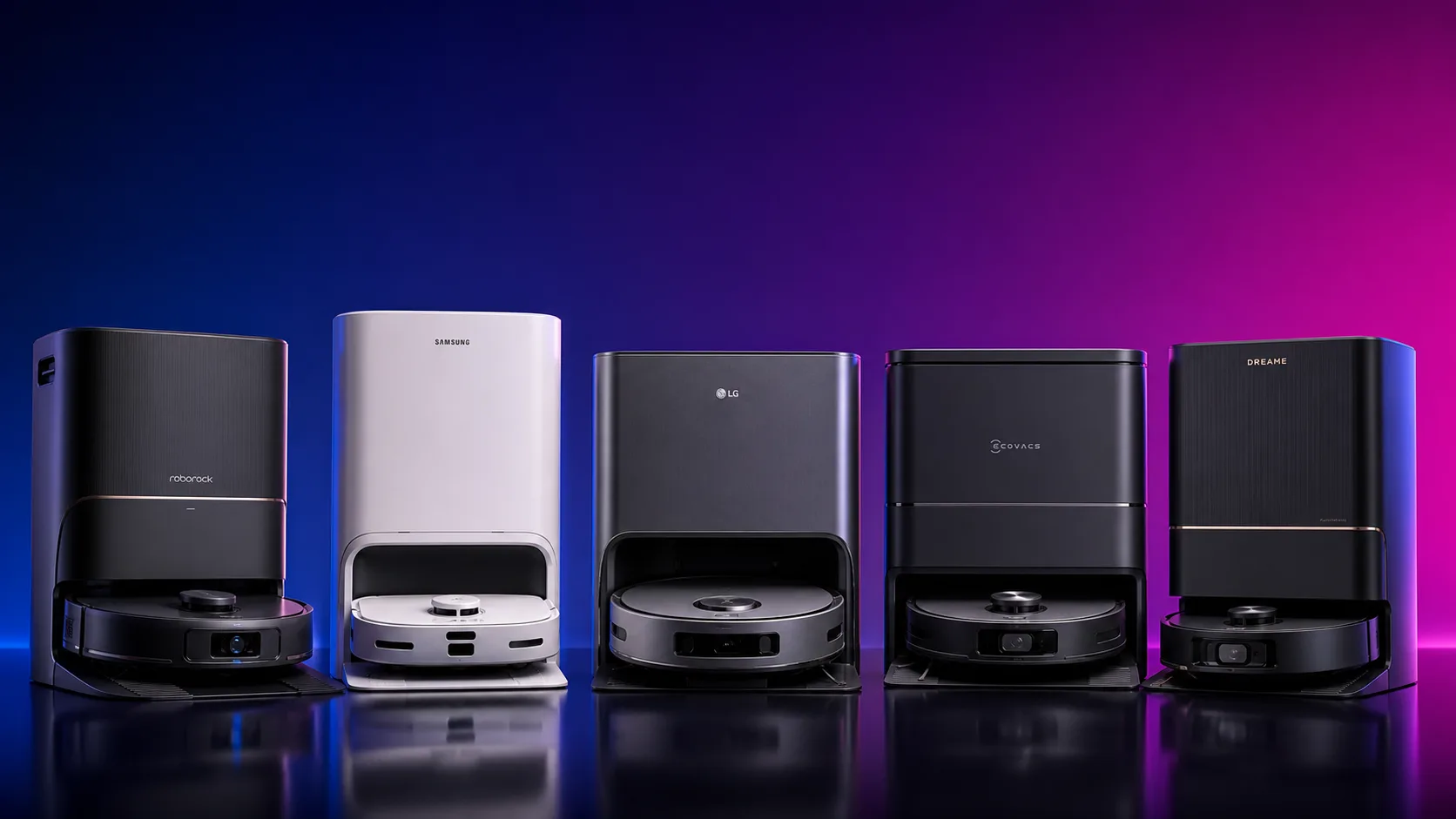
As of August 2026, Korea’s robot vacuum market has just been through a shake-up that even changed the brand names on the box. LG’s “Roboking,” a name it had used for more than 20 years, is completely gone, replaced by a brand-new line called “HOM-BOT.” Samsung, too, has quietly pushed its familiar “Jet Bot” name aside in favor of “Bespoke AI Steam.” If you want to do a proper robot vacuum comparison in the middle of all this, you can’t just trust the brand names and spec sheets you bookmarked a year ago — you need to double-check what each manufacturer is actually selling right now.
This guide compares five brands that either launched officially in Korea or remain the current flagship somewhere between the first and second half of 2026: the Roborock S10 MaxV Ultra, Samsung Bespoke AI Steam Ultra, LG HOM-BOT AI RONi, Ecovacs DEEBOT X11 Pro OMNI, and Dreame X50 Ultra. Everything here is built strictly on published specs, official pricing, and market developments from the past six months. Along the way, we’ll flag why picking a winner by suction-power numbers alone can backfire, why every brand measures suction in different units (Pa vs. W), and why a cheaper unit price doesn’t automatically mean lower running costs.
Choosing a robot vacuum has gotten more complicated for a simple reason. Auto water fill-and-drain (plumbed-in docks) has become a standard feature on premium lines, and AI obstacle detection and self-cleaning mop rollers are no longer exclusive to top-tier flagships — so a plain feature checklist no longer shows much difference between brands. On top of that, some Chinese robot vacuum makers have broken the usual “new model = higher price” pattern by launching successors that are actually cheaper than the model they replace, which makes price alone an unreliable way to judge a product’s tier.
This robot vacuum comparison covers, in order: an at-a-glance comparison table, a feature deep-dive for each product, a suction-power and obstacle-detection benchmark, a full pricing breakdown, recommendations by user type, practical tips and common mistakes, and an FAQ. If you’re also thinking about smart-home integration, our map app comparison covers how indoor/outdoor positioning technology has evolved, and if you’re curious about the AI behind obstacle recognition, our AI model comparison is worth a look too.
1. Executive Summary: The 2026 Robot Vacuum Comparison at a Glance
For readers short on time, here’s every flagship’s core information compressed into one table. This robot vacuum comparison table is built entirely on official price lists, press coverage, and retailer spec pages (including Danawa, Korea’s leading price-comparison and spec site), and because each brand reports suction power in different units, we’ve kept the original figures exactly as published rather than converting them.
📊 The Full August 2026 Robot Vacuum Comparison Table
| Category | Roborock S10 MaxV Ultra | Samsung Bespoke AI Steam Ultra | LG HOM-BOT AI RONi | Ecovacs DEEBOT X11 Pro OMNI | Dreame X50 Ultra |
|---|---|---|---|---|---|
| Core design philosophy | Premium hardware leader pushing the envelope on suction power and obstacle-recognition range | Hot-water-plus-steam mopping tuned for Korean home usability | World-first 100°C two-way steam, relaunched as a standalone robotics brand | Large-space cleaning algorithm plus an open Matter ecosystem | Specialized “physical accessibility” — clearing low clearances and thresholds |
| Latest version / model | S10 MaxV Ultra / Slim (launched in Korea Feb 27, 2026) | Bespoke AI Steam Ultra / Plus / standard (2026 lineup) | RONi — Objet Station (N95THO) and Hidden Station | DEEBOT X11 Pro OMNI (launched January 2026) | X50 Ultra (successor to the X40 Ultra) |
| Rated suction power | 36,000Pa (some sources also cite 35,000Pa) | 22,000Pa (also listed separately as 10W) | Up to 30W (no Pa figure published) | Up to 19,500Pa, 18L/s airflow | 20,000Pa |
| Obstacle recognition | 300+ types | ~121 types | ~120 types | Exact figure not confirmed | Exact figure not confirmed (AI object recognition confirmed, but not a count) |
| Mop washing | Sonic mop vibrating 4,000 times/min; dock washes it in 100°C hot water | 200rpm rotation + 8N triple lift, 65°C hot water + steam (55°C option) | 180rpm rotation, world-first 100°C two-way steam | PowerBoost fast charging (gains ~6% battery during the ~3-minute mop wash) | Automatic hot-water wash + warm-air drying, auto lift-up on carpet detection |
| Auto water fill/drain | Optional (separate standard / plumbed-in models) | Optional (varies by model) | Not confirmed (only station type is differentiated) | Not confirmed | Auto water fill supported (level of drain automation unclear) |
| Matter support | Rolling out on some flagships (specific model unclear) | Centered on its own SmartThings ecosystem | Centered on the LG ThinQ ecosystem (whether the robot itself is Matter-certified is unclear) | Officially supported (rolling out since the 2025 X8) | Not confirmed |
| Korea price (top trim) | ₩1.89M–₩2.04M (approx. $1,360–$1,470) | ₩1.58M–₩1.90M (approx. $1,140–$1,370) | approx. ₩2.14M (approx. $1,540; some sources: ₩1.95M–₩1.96M / approx. $1,400–$1,410) | ₩799,000 (approx. $575) | list ₩1.79M (approx. $1,290) / street price approx. ₩1.39M (approx. $1,000) |
| Strengths | Dominant suction power and obstacle-recognition range, 100°C hot-water mop wash | Hot water + steam mopping, usability tuned for Korean homes, accessible after-sales service | World-first 100°C two-way steam, space-aware cleaning | Less than half the price of the top-tier rivals, open Matter connectivity | Specialized threshold-clearing (6cm) and low-clearance handling, strong street price |
| Weaknesses | Reports of thin after-sales staffing in Korea, premium price tier | Suction figure looks lower next to Roborock’s (though the unit difference needs to be factored in) | Limited information so soon after the brand relaunch, no Pa figure published | Sparse published detail on obstacle-recognition specs | Some specs unconfirmed, including whether Matter is supported |
| Best suited for | Early adopters chasing top specs, pet-owning households | Korean households that prioritize steam mopping | LG ecosystem users who want the latest water and temperature management features | Users who want value for money and open smart-home integration | Older apartments with lots of thresholds, homes with lots of low-clearance furniture |
The first row worth studying closely is suction power. Roborock reports in Pa, LG reports in W — a completely different unit — and Samsung lists both. We’ll dig into this more later, but lining these numbers up and concluding “Roborock is overwhelmingly the strongest” is one of the most common mistakes people make in any robot vacuum comparison.
2. Feature Deep-Dive: The Five Flagship Robot Vacuums
🤖 1) Roborock S10 MaxV Ultra — The Hardware Heavyweight That Tops Every Spec Sheet
- Suction power and sensor stack: The official spec lists 36,000Pa, though some articles also cite a “HyperForce 35,000Pa” figure. Since the exact final number needs re-verification on Roborock’s own site, we’re presenting both figures here rather than picking one. On the sensor side, a high-precision LiDAR unit is paired with a 3D ToF (time-of-flight) sensor and VertiBeam, a side-facing sensor for detecting obstacles off to the sides, together identifying more than 300 types of obstacles — cables, furniture, pets, and more.
- Getting under low furniture: It can clear thresholds and obstacles up to 7.95cm tall, and when it needs to duck under low furniture, its LiDAR module retracts into the body while still holding onto a 100-degree rear field of view. That keeps blind spots to a minimum even in the tight furniture layouts typical of Korean apartments.
- Mop automation: An extendable sonic mop that vibrates 4,000 times per minute is paired with a dock that washes the pad in 100°C hot water. The main brush uses a DuoDivide™ design, and the side brush is a FlexiArm™ built specifically for tight spaces and corners.
- Recent developments: On February 27, the S10 MaxV Ultra and Slim launched officially in Korea at a premium price point — ₩1.89M (approx. $1,360) for the standard version and ₩2.04M (approx. $1,470) for the plumbed-in version. Earlier that same year, in January, at CES 2026, Roborock had already unveiled the Saros 20 series alongside Saros Rover, a concept robot with the world’s first wheel-leg design, and announced a partnership with Real Madrid (though it’s unconfirmed whether or when this lineup will reach Korea). In June, Roborock’s flagships got discounted through large-scale promotions like Naver’s “Nekda Sale” event.
- A word of caution: Korea’s Consumer Agency (KCA) has pointed out that Pa, the unit most brands use for rated suction, doesn’t convert directly to the international standard unit, watts (W). In its testing, 5 of the Chinese-made products examined delivered actual suction under half of their rated figure. It’s not clear whether Roborock specifically was among them, but it’s a fair signal that comparing brands purely on Pa numbers is risky. There have also been reports that Chinese brands, Roborock included, have thin after-sales staffing relative to sales volume in Korea, with repairs in some cases taking more than a month.
💧 2) Samsung Bespoke AI Steam Ultra — Betting on Hot Water and Steam for Korean Homes
- Why the brand switched: For its 2026 lineup, Samsung has put “Bespoke AI Steam” front and center instead of the familiar “Jet Bot” name. That said, the product page URLs still carry internal codenames like “jetbot-vr90f01…,” so it’s not entirely clear whether this is a full brand retirement or just a marketing sub-name layered on top. The confirmed model codes for the Ultra tier are VR90F01SAG (auto fill-and-drain) and VR90F01AAG (freestanding).
- Mopping performance: A mop pad that spins at 200rpm is combined with 8N triple-lift (a mechanism that raises the main brush and side brush too), plus both a 65°C hot-water-and-steam wash and a 55°C hot-water-only option. A new feature called “Pop-Out Combo” uses a pop-out mop to hug the wall closely while mopping, and a pop-out side brush to extend suction coverage into corners.
- Sensors and recognition: A dToF sensor works alongside two RGB cameras and a side sensor (assisted by infrared LEDs) to power AI object recognition that can even pick up transparent liquids; according to Danawa’s comparison coverage, its obstacle recognition covers roughly 121 types. The battery is 5,000mAh, and the unit measures 359×364×100mm.
- Pricing tiers: The lineup spans three tiers. The Ultra tier runs about ₩1.58M–₩1.90M (approx. $1,140–$1,370, varying by fill-and-drain configuration and retailer); the Plus tier is ₩1.94M (approx. $1,400) with auto fill-and-drain or ₩1.76M (approx. $1,265) freestanding; and the standard tier is ₩1.59M (approx. $1,140) with auto fill-and-drain or ₩1.41M (approx. $1,015) freestanding.
- Recent developments: Samsung Newsroom has promoted this lineup with lines like “accelerating the mainstreaming of the K-robot vacuum” and “optimized for Korean homes,” positioning easier after-sales access, hot-water-plus-steam mopping, and better handling of Korea’s compact home layouts as its key differentiators versus Chinese brands.
🔥 3) LG HOM-BOT AI RONi — A 20-Year Brand Retired, Reborn as an Independent Robotics Line
- A complete rebrand: Alongside its 2026 product launches, LG Electronics retired “Roboking” — a name it had used for more than 20 years — along with the unified Cordzero branding, and moved to “HOM-BOT” as a standalone robotics brand. The news first broke as an exclusive from ETNews (a Korean IT trade paper) on June 10, 2026, and the flagship model is called RONi. It ships in two station configurations: the RONi Objet Station (model N95THO) and the RONi Hidden Station (N95TWU / N95THU).
- World-first 100°C two-way steam: RONi’s headline feature is two-way steam at 100°C, which LG says both breaks down grease and stains and eliminates 99.99% of harmful bacteria in the mop pad. After washing, warm-air drying is said to cut odor-causing substances in the mop by up to 97%.
- Space-aware cleaning: RONi adjusts its cleaning approach room by room — in a space like the kitchen, where food debris falls often, it runs a denser cleaning path and boosts suction. Its mop spins at 180rpm.
- Limits of what’s been disclosed: Suction power is published only as “up to 30W,” which makes a direct comparison with Pa-rated brands difficult. Obstacle recognition is reported at around 120 types per Danawa’s comparison coverage — a lower figure than Roborock’s 300-plus or Samsung’s roughly 121.
- Pricing and what’s still unconfirmed: The list price for the Objet Station (N95THO, Essence White) is about ₩2.14M (approx. $1,540), though some sources cite ₩1.95M–₩1.96M (approx. $1,400–$1,410) instead — it’s unclear whether that’s a difference in configuration or just a difference in timing. Hidden Station pricing hasn’t been confirmed yet. Smart-home integration through the LG ThinQ app continues, and ThinQ’s ability to bridge to other Matter-certified devices is expanding, but whether the vacuum itself carries Matter certification hasn’t been confirmed.
🌊 4) Ecovacs DEEBOT X11 Pro OMNI — Value-Priced and Open-Ecosystem for Big Homes
- An algorithm built for big spaces: Ecovacs’ proprietary path-planning algorithm is designed to clean up to 1,000㎡ (roughly 300 pyeong, the Korean unit for floor area) in a single run. Rated suction is published at up to 19,500Pa, with 18L/s of airflow.
- Fast-charging tech: A fast-charging feature called “PowerBoost” tops up roughly 6% of battery in the ~3 minutes it takes to wash the mop. It’s a practical way to ease battery anxiety mid-cleaning-cycle.
- Official Matter support: Matter support has been rolling out via OTA update since the 2025 flagship DEEBOT X8, reaching major models like the X2 and X2 Combo, and it carries over to the X11 Pro OMNI as well. That gives it an open-ecosystem edge — it connects to Apple Home, Google Home, Samsung SmartThings, and LG ThinQ without a separate hub.
- Price competitiveness: The Korean retail price is ₩799,000 (approx. $575, per Danawa) — less than half of what other brands charge for their top trims. That said, details like the obstacle-avoidance sensor configuration and the exact number of recognizable obstacle types weren’t confirmable through public sources, so it’s worth cross-checking against real user reviews on this point.
- Recent developments: The DEEBOT X11 Pro OMNI was unveiled in January 2026 on Naver Shopping Live’s “Hot IT Issue” segment, and Ecovacs’ Matter rollout, underway since 2025, continued through 2026 — accelerating its entry into Korea’s SmartThings and ThinQ ecosystems.
🦵 5) Dreame X50 Ultra — Purpose-Built “Physical Accessibility” to Conquer Thresholds and Low Clearances
- Pro-Leap threshold-clearing: A feature called “Pro-Leap” lets the robot raise a set of folding legs to clear thresholds or obstacles up to 6cm tall. It’s a feature you’ll especially notice in older apartments, where every room tends to have its own raised threshold.
- VersaLift for low clearances: “VersaLift Navigation” extends cleaning coverage into low spaces like under sofas and beds. It also automatically lifts the mop and brush when it detects carpet or a rug.
- Battery and suction: A 6,400mAh battery delivers up to 3 hours 40 minutes of runtime on a single charge, and rated suction is 20,000Pa. The mop supports automatic hot-water washing and warm-air drying, and dust emptying is handled by an all-in-one docking station — a fully integrated, premium setup.
- Price appeal: The launch list price is ₩1.79M (approx. $1,290), but street prices have settled around ₩1.39M (approx. $1,000) — with promotional pricing sometimes landing around ₩1.5M (approx. $1,080) too — so the value relative to list price feels strong.
- A big step up from its predecessor: The X50 Ultra launched with substantial gains over the X40 Ultra in suction power, threshold-clearing (Pro-Leap), and low-clearance handling (VersaLift). Korean retailers like 11st (a major domestic online marketplace) have run pre-order promotions for it. That said, official Matter support hasn’t been clearly confirmed — only remote control through the app has been verified.
3. The Suction-Power and Obstacle-Recognition Benchmark Showdown
Suction power is the single most-cited — and most-misunderstood — metric in any robot vacuum comparison. Below are the figures each brand publishes as-is; make sure to read the unit-conversion caveat that follows right after.
[Officially published suction power rankings, as of August 2026 — unit caveat below]
Roborock S10 MaxV Ultra  : ⭐⭐⭐⭐⭐ 36,000Pa (some sources: 35,000Pa)
Samsung Bespoke AI Steam : ⭐⭐⭐☆☆ 22,000Pa (also listed as 10W)
Dreame X50 Ultra         : ⭐⭐☆☆☆ 20,000Pa
Ecovacs X11 Pro OMNI     : ⭐⭐☆☆☆ 19,500Pa (18L/s airflow)
LG HOM-BOT AI RONi : ⭐⭐☆☆☆ 30W (no Pa published, not directly comparable)| Category | Roborock S10 MaxV Ultra | Samsung Bespoke AI Steam Ultra | LG HOM-BOT AI RONi | Ecovacs DEEBOT X11 Pro OMNI | Dreame X50 Ultra |
|---|---|---|---|---|---|
| Rated suction | 36,000Pa (some sources: 35,000Pa) | 22,000Pa (also 10W) | 30W (no Pa published) | 19,500Pa | 20,000Pa |
| Obstacle types recognized | 300+ | ~121 | ~120 | Not confirmed | Not confirmed |
| Sensor configuration | LiDAR + 3D ToF + VertiBeam (side) | dToF + 2 RGB cameras + side sensor | Not confirmed (only the space-aware algorithm is confirmed) | Not confirmed (only AI object recognition is confirmed) | Camera + LDS (laser distance sensor), 2D mapping |
| Mop wash water temperature | 100°C | 65°C (+steam), 55°C option | 100°C two-way steam (world-first) | Not confirmed | Hot water (exact temperature not confirmed) |
Going by the numbers alone, Roborock looks like the runaway winner, but Korea’s Consumer Agency has pointed out that pascals (Pa) — the unit robot vacuum makers use for suction power — don’t convert directly to watts (W), the international standard unit. Among the Chinese-made products it tested, 5 delivered actual suction under half their rated figure. That result wasn’t tied to any specific brand, but it’s a clear signal that a Pa rating on its own shouldn’t be trusted as an absolute performance measure. Some brands, like LG, publish only in watts; others, like Samsung, list both units — which means lining up all five brands on a single scale is structurally impossible from the start. We want to state that up front as one of this comparison’s core conclusions.
A metric that’s arguably more closely tied to real-world satisfaction is the number of obstacle types recognized. Roborock leads with 300-plus, followed by Samsung and LG both hovering around 120 — though these figures ultimately trace back to press outlets’ Danawa comparison articles as their primary source, so cross-checking against each brand’s official spec sheet is still warranted. If you have pets, or a floor that tends to have things scattered on it, weighing obstacle-recognition range and mop-wash temperature (specifically, whether it hits the 100°C tier) is more likely to translate into real satisfaction than chasing the Pa number on the spec sheet.
4. Full Pricing Comparison
[Korea price for the top trim, as of August 2026 — lowest to highest]
Ecovacs DEEBOT X11 Pro OMNI      : ₩799,000 (approx. $575)
Dreame X50 Ultra (street price)  : approx. ₩1.39M / $1,000 (list price ₩1.79M / $1,290)
Samsung Bespoke AI Steam Ultra   : ₩1.58M–₩1.90M (approx. $1,140–$1,370)
Roborock S10 MaxV Ultra          : ₩1.89M–₩2.04M (approx. $1,360–$1,470; standard/plumbed-in)
LG HOM-BOT AI RONi (Objet Station): approx. ₩2.14M / $1,540 (some sources: ₩1.95M–₩1.96M / $1,400–$1,410)
💰 Detailed Robot Vacuum Pricing Table
| Product | Korea price (top trim) | Lower / entry-level price | Notes (US, etc.) |
|---|---|---|---|
| Roborock S10 MaxV Ultra | Plumbed-in ₩2.04M (approx. $1,470) | Standard ₩1.89M (approx. $1,360; Danawa retail price range ₩1.69M–₩1.84M / approx. $1,220–$1,320) | Saros Rover $2,499 (preview), Saros 20 pricing not yet announced |
| Samsung Bespoke AI Steam | Ultra ₩1.58M–₩1.90M (approx. $1,140–$1,370) | Standard: ₩1.59M (approx. $1,140) with fill-and-drain / ₩1.41M (approx. $1,015) freestanding; Plus: ₩1.94M (approx. $1,400) with fill-and-drain / ₩1.76M (approx. $1,265) freestanding | Korea-only lineup |
| LG HOM-BOT AI RONi | Objet Station approx. ₩2.14M (approx. $1,540; some sources: ₩1.95M–₩1.96M) | Hidden Station pricing not confirmed | Korea-only lineup |
| Ecovacs DEEBOT X11 Pro OMNI | ₩799,000 (approx. $575) | No separate lower tier confirmed | X11 OmniCyclone promotional price $1,199.99 (after a $300 discount) |
| Dreame X50 Ultra | List price ₩1.79M (approx. $1,290) | Street price approx. ₩1.39M / $1,000 (around ₩1.5M / $1,080 during promotions) | Primarily sold through Korean retailers |
Looking at the price tags alone, Ecovacs and Dreame seem dramatically cheaper, but three factors matter when you’re calculating actual cost of ownership. First, consumable replacement costs. Mop pads typically need replacing every 1–3 months and filters every 1–2 months; as a general rule of thumb, people cite average maintenance costs around ₩10,000 (approx. $7) a month, but the exact price gap between brands’ genuine replacement parts wasn’t confirmed. It’s safest to check replacement intervals and genuine-part pricing directly with the retailer before you buy.
Second, after-sales accessibility. There have been reports that Chinese brands like Roborock have thin after-sales staffing relative to sales volume in Korea, with repairs sometimes taking more than a month, whereas Samsung and LG lean on their existing domestic service-center networks as a marketing point. Even a cheap unit price can end up costing more in total-cost-of-ownership terms if a breakdown means a long wait for repairs.
Third, promotional volatility. Roborock offered steep discounts off list price through major promotions like Naver’s June “Nekda Sale,” and Dreame’s street price sits around ₩1.39M against a ₩1.79M list — so if you budget off list price alone, the gap versus what you’ll actually pay can be significant. Right before you buy, make it a habit to check the current street price on a comparison site like Danawa.
5. Final Recommendations by User Type
🎯 1) Early Adopters with Pets Who Want the Best Specs Available
- Best pick: Roborock S10 MaxV Ultra
- Why: Between 300-plus obstacle types recognized, 36,000Pa-class suction, and 100°C hot-water mop washing, this is the most aggressive spec sheet of the five brands. Just factor in the reported shortage of after-sales staff in Korea.
🎯 2) Korean Households That Prioritize Hot-Water and Steam Mopping
- Best pick: Samsung Bespoke AI Steam Ultra
- Why: The 65°C hot-water-plus-steam wash and 8N triple-lift show a design that’s really invested in mop quality, and Samsung leans on its domestic after-sales network and its handling of Korea’s tight home layouts as strengths — a solid, low-risk choice for a first-time buyer, too.
🎯 3) Users Already Invested in the LG ThinQ Ecosystem Who Want the Latest Hygiene Features
- Best pick: LG HOM-BOT AI RONi
- Why: World-first 100°C two-way steam eliminates 99.99% of harmful bacteria in the mop pad, and space-aware cleaning varies intensity room by room. Just keep in mind that, being so early in the brand relaunch, there’s relatively less spec information available.
🎯 4) Big-Home Owners Who Want Open Smart-Home Integration
- Best pick: Ecovacs DEEBOT X11 Pro OMNI
- Why: A path-planning algorithm that maps up to 1,000㎡ in one pass, plus official Matter support that connects to Apple Home, Google Home, Samsung SmartThings, and LG ThinQ without a hub. Its ₩799,000 (approx. $575) price is appealing too.
🎯 5) Older Apartments with Lots of Thresholds, or Homes with Lots of Low-Clearance Furniture
- Best pick: Dreame X50 Ultra
- Why: Pro-Leap technology clears thresholds up to 6cm tall, and VersaLift Navigation extends cleaning into low-clearance spaces. List price is ₩1.79M (approx. $1,290), but the street price sits around ₩1.39M (approx. $1,000), so the perceived value for money is strong too.
🎯 6) First-Time Buyers Who Are Budget-First
- Best pick: Ecovacs DEEBOT X11 Pro OMNI or Dreame X50 Ultra (going by street price)
- Why: Both models pack in premium features like automatic dust emptying and self-washing mops, while sitting at a noticeably lower price point than the other three brands. If you’re curious about cloud-based app connectivity or data backup, our cloud storage comparison covers data-sync concepts in a similar vein — worth a look before you buy, since it applies to how these robots store their cleaning-map data in the cloud too.
6. Practical Tips and Common Mistakes
✅ Tip 1) Don’t Search Under the Old Brand Names Without Realizing They’ve Changed
In June 2026, LG officially retired “Roboking” in favor of “HOM-BOT,” and Samsung has pushed “Bespoke AI Steam” to the front instead of “Jet Bot.” Search online under the old brand names and you’ll mostly turn up discontinued models and stale reviews. Before you buy, make sure to search again under the current brand and model names (RONi, Bespoke AI Steam) to confirm the latest specs and pricing.
✅ Tip 2) Don’t Treat Pa and W Numbers as Directly Comparable
As Korea’s Consumer Agency has pointed out, there’s no standardized formula for converting between Pa and W. Roborock, Ecovacs, and Dreame report in Pa; LG reports only in W; and Samsung lists both. The intuitive assumption that “a bigger number means stronger suction” can mislead you because each brand measures differently, so it’s safer to also check real user reviews or hands-on suction-comparison videos.
✅ Tip 3) Budget Off the Street Price, Not the List Price
The Dreame X50 Ultra lists at ₩1.79M (approx. $1,290) but sells on the street for around ₩1.39M (approx. $1,000), and Roborock has also run steep list-price discounts through major promotions like Naver’s June Nekda Sale. If you budget based on list price alone, you could miss out on a cheaper actual purchase — check the current street price on Danawa or a similar site right before you buy.
✅ Tip 4) Check Expected Repair Turnaround for Chinese Brands Beforehand
There have been reports that Chinese brands like Roborock have thin after-sales staffing relative to sales volume in Korea, with repairs in some cases taking more than a month. If you’re planning to buy a high-end premium model, it’s worth asking the retailer or the official service center in advance about average repair turnaround time and whether a loaner unit is available.
✅ Tip 5) Matter Support Varies by Model — Always Verify It
Ecovacs has been rolling out Matter support via OTA update since the 2025 flagship X8, reaching major models like the X2 and X2 Combo, so it connects to Apple Home and Google Home without a hub. Samsung and LG, by contrast, are each centered on their own SmartThings and ThinQ ecosystems, and Dreame’s Matter support hasn’t been confirmed. If you’re already committed to a particular smart-home ecosystem, verify the exact model’s Matter certification directly on its official spec sheet before buying.
✅ Tip 6) Compare Obstacle-Recognition Range and Mop-Wash Temperature Together
Since suction-power units differ from brand to brand and can’t be directly compared, weighing obstacle-recognition range (Roborock’s 300-plus, Samsung’s ~121, LG’s ~120) alongside mop-wash temperature (Roborock and LG’s 100°C tier vs. Samsung’s 65°C-plus-steam) gives you a more practical basis for choosing.
7. Frequently Asked Questions
Q. What matters most in a 2026 robot vacuum comparison?
Real-world buyers repeatedly weigh three things together: suction power (Pa or W), how much maintenance is automated — self-washing mops, warm-air drying, and auto fill-and-drain included — and AI obstacle-avoidance accuracy (the sensor combination and the number of obstacle types it can recognize), plus total cost of ownership, meaning the unit price plus consumable replacement costs and how convenient after-sales support is.
Q. Is LG’s Roboking really gone for good?
Yes. In June 2026, LG Electronics officially retired “Roboking,” a name it had used for more than 20 years, along with the unified Cordzero branding, and moved to “HOM-BOT” as a standalone robotics brand. The new flagship is called “RONi,” and it’s available in two configurations: Objet Station and Hidden Station.
Q. Is Samsung’s Bespoke AI Steam a successor to Jet Bot?
That hasn’t been fully confirmed officially. The new “Bespoke AI Steam” name is now front and center, but the product page URLs still carry internal codenames like “jetbot-vr90f01…,” so it’s unclear whether this is a genuine brand renewal or simply an added marketing sub-name.
Q. If Roborock has the highest suction number, is it automatically the best buy?
Not necessarily. Korea’s Consumer Agency has pointed out that robot vacuums’ Pa ratings don’t convert directly to the international standard unit, W, and 5 of the Chinese-made products it tested delivered actual suction under half their rated figure. Since brands use different measurement standards and units (Pa vs. W), comparing raw numbers can be misleading on its own — it’s better to also weigh other metrics, like obstacle-recognition range or mop-wash temperature.
Q. Which brand is the cheapest way into a robot vacuum?
The Ecovacs DEEBOT X11 Pro OMNI is the cheapest of the five at ₩799,000 (approx. $575), and the Dreame X50 Ultra, while listing at ₩1.79M (approx. $1,290), sells on the street around ₩1.39M (approx. $1,000), making it relatively accessible too. That said, the lower price comes with some information gaps — details like obstacle-recognition specs or Matter support haven’t been fully disclosed officially — so cross-check with real user reviews.
Q. Do I really need auto water fill-and-drain (plumbed-in) on a robot vacuum?
As of 2026, auto fill-and-drain is becoming a standard feature on premium lines. Roborock and Samsung run separate models (with different prices) depending on whether fill-and-drain is included, and Dreame supports auto water fill, though the exact level of drain automation hasn’t been confirmed. If you want to skip the hassle of manually filling and emptying the water tank, this feature is worth prioritizing — but depending on your installation environment (for example, needing to be near a water line), actual plumbing work may be required, so check on that before you buy.
Q. Is after-sales support for Chinese robot vacuum brands really that inconvenient?
According to reporting from February 2026, Chinese brands like Roborock had thin after-sales staffing relative to sales volume in Korea, with some repair cases taking more than a month. That said, this reflects reporting from a specific point in time, and each brand’s service-center expansion can keep changing — so it’s safest to ask the retailer directly about current after-sales policy and average turnaround time before you buy.
Q. What’s the advantage of a robot vacuum that supports Matter?
Matter is a smart-home standard, and support for it lets a device connect to different ecosystems — Samsung SmartThings, LG ThinQ, Apple Home, Google Home, and more — without needing a separate hub. Ecovacs has been rolling out Matter support across major models starting with its 2025 flagship X8, so households running smart-home devices from multiple brands can feel the convenience of that open integration firsthand.
8. Conclusion: In the 2026 Robot Vacuum Comparison, Look Past the Brand Name to Specs and Running Costs
The first change worth flagging in this robot vacuum comparison is the brand names themselves. With LG’s “Roboking” becoming “HOM-BOT” and Samsung’s “Jet Bot” becoming “Bespoke AI Steam,” the old habit of searching and comparing under the previous brand names no longer works. Factor in, too, that the unit for suction power (Pa vs. W) differs by brand, and that — as Korea’s Consumer Agency has pointed out — there can be a gap between rated and measured figures, and it becomes clear that picking a winner off a single number on the spec sheet is a risky approach.
The practical takeaway is to pick based on your own living situation. Roborock has the edge if you have pets, a big home, and want top-tier specs; Samsung if hot-water-and-steam mopping and domestic after-sales access matter most to you; LG HOM-BOT if you’re invested in the LG ThinQ ecosystem and want the latest hygiene features; Ecovacs if you have a large floor plan and want open smart-home integration; and Dreame if you live in an older apartment with lots of thresholds and low-clearance spaces. If you’re curious about the broader smart-home landscape, our map app comparison covers where positioning and route-recognition technology is heading — a thread that connects to the indoor-mapping tech inside these robot vacuums too.
[Summary: the right pick for your situation]

Top specs, pet-owning household
  → Roborock S10 MaxV Ultra (₩1.89M–₩2.04M, approx. $1,360–$1,470; 300+ obstacle types recognized)

Hot-water/steam mopping + strong domestic after-sales
  → Samsung Bespoke AI Steam Ultra (₩1.58M–₩1.90M, approx. $1,140–$1,370)

LG ThinQ ecosystem + latest hygiene features
  → LG HOM-BOT AI RONi (approx. ₩2.14M / $1,540; world-first 100°C two-way steam)

Large floor plan + open smart-home (Matter) integration
  → Ecovacs DEEBOT X11 Pro OMNI (₩799,000, approx. $575)

Older apartment with lots of thresholds + low-clearance spaces
  → Dreame X50 Ultra (list ₩1.79M/$1,290, street price approx. ₩1.39M/$1,000)
The more brand names shift and prices swing, the more a robot vacuum comparison grounded in actual specs and total cost of ownership — rather than surface appearances — pays off. Right before you buy, use the tables in this guide as your starting point, then double-check the latest pricing and promotions on each brand’s official page.