Duolingo vs. Speak vs. Cake vs. Santa vs. Lingoda: The 2026 English Learning App Comparison
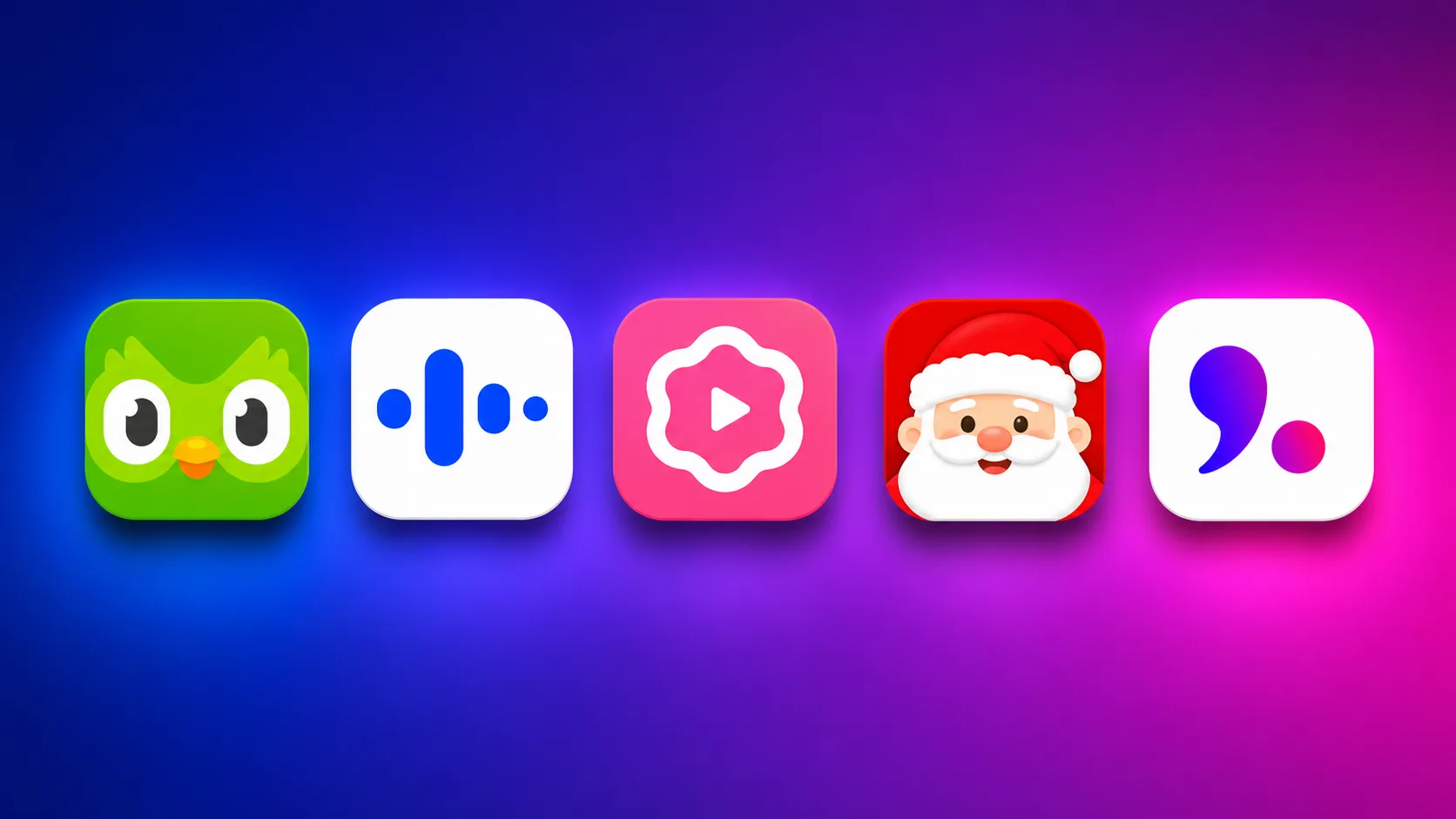
As of August 2026, answering “if I could only pick one English learning app, which one should it be?” in a single sentence has never been harder. Just a few years ago, these apps were mostly gamified drills that made you repeat vocabulary and grammar rules. Now GPT-powered AI can hold a real-time voice conversation and correct your pronunciation on the fly. So this English learning app comparison isn’t about “which one is more famous” — it’s about pinning down, against official sources, exactly what learning goal each app is built for and how their real pricing actually works.
The global digital English-learning market is estimated at roughly $18.49 billion in 2026 and is projected to keep growing to $65.74 billion by 2035 — still a fast-expanding category. Asia-Pacific demand, Korea included, is overwhelming: the region accounted for more than 40% of the entire market as of 2025. On Korea’s education-app revenue charts, conversational AI apps have become dominant enough that Speak has traded the #1 and #2 spots with Malhae Voca (a popular Korean-market vocabulary app) for the past two years running. Against that backdrop, the five apps this guide covers — Duolingo, Speak, Cake, Santa, and Lingoda — each take a completely different approach to teaching English.
Three factors really drive the buying decision across all five. First is how natural and practical the AI conversation partner actually is: Duolingo opened its GPT-based Video Call to every free user starting in January 2026, Speak built a direct partnership with OpenAI, and Lingoda goes the opposite direction entirely, centering its whole product on live video classes with real human teachers instead of AI. Second is whether the app is built for Korea’s certified English exams — TOEIC, TOEIC Speaking, and OPIc (Oral Proficiency Interview-computer, a spoken-English test widely required by Korean employers). Santa is overwhelmingly specialized on this axis; the rest are general-conversation apps. Third is pricing design: of the five, only Lingoda runs on a pay-per-class (class-credit) structure, while the other four use flat-rate subscriptions.
This guide moves in order through a full five-way comparison table, a feature deep dive for each product, an AI-conversation-quality benchmark, a complete pricing breakdown, recommendations by user type, practical tips, and an FAQ. Pricing figures in particular vary wildly from blog to blog, so we’ve been careful throughout to separate numbers confirmed directly on official pages from numbers we couldn’t verify — treat this as your final check before you actually pay for anything.
1. Executive Summary: The 2026 English Learning App Comparison at a Glance
For learners short on time, here’s every essential detail on the five apps as of August 2026, condensed into one table. Skimming this alone should narrow your options down to one or two candidates.
📊 The Top 5 English Learning Apps — August 2026 Comparison Table
| Category | Duolingo | Speak | Cake | Santa | Lingoda |
|---|---|---|---|---|---|
| Core design philosophy | Gamified, all-around language learning | OpenAI-powered AI free-talking | Short-form phrases + roleplay | AI-adaptive TOEIC/TOEFL specialist | Live classes with real certified teachers |
| Latest product lineup | Free / Super / Max (AI) | Premium / Premium Plus | Free / Cake Plus | Basic / Free Pass / Premium Pass | Sprint / standard subscription (class credits) |
| AI tutor? | Max tier (GPT-based, Video Call open to all free users) | Yes (OpenAI partnership, credit system) | Yes (speaking roleplay) | Yes (problem-recommendation AI “Lumi,” not conversation-focused) | No (real human teachers instead of AI) |
| Free-tier limit | 25 Energy points (Hearts retired July 2025) | Pay-as-you-go, limited free use | Free daily phrase content + 2-week trial | 3-day free trial | 7-day free trial (3 group classes or 1 private class) |
| Confirmed paid price example | Max $168/yr or Super $95.99/yr (US) | Annual Premium $83.99 (US) | LG U+ carrier bundle, ₩9,900/mo (~$7) | ₩149,000/30 days (~$103, official App Store price) | Group, 20-class pack €400.99/4 weeks (official) |
| Official Korean-won price | Sources conflict, can’t be confirmed | Official pricing page unreachable, unconfirmed | Varies by channel (in-app purchase vs. carrier bundle) | Confirmed in KRW (official App Store listing) | Unconfirmed (official Korean site unreachable) |
| App Store rating | Unconfirmed | 4.8/5 (55,000+ ratings, US) | 4.9/5 (23,000+ ratings) | Unconfirmed | Unconfirmed |
| Exam-prep specialization | Low (general conversation/grammar) | Unconfirmed (appears free-talking-focused) | Medium (marketed as useful for TOEIC Speaking/OPIc) | Very high (built exclusively for TOEIC/TOEFL) | Low (appears CEFR conversation/grammar-focused) |
| Strengths | Free AI video calls even on the free tier, massive content library | Specialized pronunciation correction, free-talking roleplay | Short, lightweight phrase learning, cheap carrier-bundle pricing | Predicted TOEIC scores, tailored questions, huge question bank | Real human video classes (not AI), refund-eligible challenges |
| Weaknesses | Official pricing is confusingly inconsistent across sources | Conversations get capped once credits run out | Official pricing differs by channel and gets confusing | Priciest tier of the five apps | Conversation-focused, no dedicated exam curriculum |
| Best fit | Daily, low-pressure practice; sampling free AI conversation | Focused pronunciation and free-talking training | Light, phrase-first learning in short bursts | Short-term TOEIC score goals | Learners who want to learn properly from a real person |
The two rows most worth lingering on here are “AI tutor?” and “Exam-prep specialization.” Lining all five apps up and asking “who’s #1 overall” is a good way to reach the wrong conclusion — Santa isn’t really a conversation app at all, it’s closer to a score-prediction tool, and Lingoda was never an AI app to begin with; it’s a platform for live video classes with human teachers. The point of this English learning app comparison isn’t “who wins,” it’s figuring out which design actually matches what you’re trying to learn.
2. Feature Deep Dive: The Top 5 English Learning Apps
🦉 1) Duolingo — The gamification giant that now opens AI video calls to everyone, free
- Switched from Hearts to an Energy system: As of July 1, 2025, the old “5 Hearts” life-limit system was retired and replaced with a 25-point “Energy” system. The resource free users spend while learning has fundamentally changed shape, so if your last experience with Duolingo was the old Hearts system, it’s worth relearning how the limits work now.
- Video Call opened to every free user: In January 2026, the AI video-call feature that used to be exclusive to Duolingo Max opened up to all free users. You can hold a real-time voice conversation with the character “Lily,” who remembers earlier conversations and automatically adjusts difficulty. Around the same time, video calls with a beginner-focused coaching character, “Falstaff,” were also added. That said, Video Call and Roleplay are only supported in a limited set of languages, and it isn’t officially clear exactly how much of that support extends to Korean speakers learning English.
- Max tier’s AI features: Duolingo’s top tier bundles an OpenAI GPT-based AI tutor, including both Roleplay (scenario-based conversations followed by AI feedback on accuracy, complexity, and vocabulary range) and Video Call. Duolingo also runs its own standardized test, the Duolingo English Test (DET), but there’s no dedicated TOEIC or TOEIC Speaking curriculum — it remains a general conversation-and-grammar app at its core.
- Pricing varies wildly by source: In US dollars, Super Duolingo at $95.99/year and Duolingo Max at $29.99/month or $168/year show up consistently across multiple review sites, but the Family Plan is cited both as $119.99/year (up to 6 people) and $240/year (6 people) depending on where you look. Korean-won pricing is even messier — blogs and Namuwiki (a large Korean crowd-sourced wiki) cite numbers from what look like entirely different pricing eras, anywhere from ₩17,000/month (
$12) down to ₩7,250/month ($5) for Super, so this guide isn’t going to declare any one of them the current official price as of August 2026. Before you actually subscribe, double-check the final amount on the in-app payment screen. - Company background: Duolingo is publicly traded (NASDAQ: DUOL), so it’s the only app here with quarterly earnings disclosures. Q1 2026 revenue was $292 million (+27% YoY), DAUs reached 56.5 million (+21% YoY), and paid subscribers hit 12.2 million as of Q4 2025 (+34% YoY), with Max making up roughly 9% of total paid subscribers at the end of 2025. Q2 2026 results hadn’t been officially released as of this writing, and it’s worth distinguishing analyst estimates circulating online from confirmed earnings. An internal “AI-first” memo sparked layoff rumors in April 2025, but the CEO stated the company had “never laid off full-time employees and has no plans to,” and the related internal policy was rescinded in May 2026, putting the controversy to rest.
🗣️ 2) Speak — OpenAI-backed pronunciation coaching built around free-talking
- Credit-based conversation structure: Conversations with the AI tutor draw down a pool of “credits” (roughly 1 word ≈ 1 credit). Multiple blogs report that Premium includes 2,000 credits/month and Premium Plus includes 10,000 credits/month, with 20-minute free-talk (roleplay) sessions capped at 6/month on Premium and 30/month on Premium Plus — enough for the Plus tier to cover a free-talk session almost every day, on paper. That said, these credit and free-talk figures are blog-sourced numbers that haven’t been reconfirmed against Speak’s own official documentation, so — like the pronunciation-accuracy figure below — it’s safer to treat them as reference numbers only.
- Official App Store pricing (US): Monthly Premium $17.99, Annual Premium $83.99 (roughly $7/month), Monthly Premium Plus $39.99, Annual Premium Plus $164.99 (roughly $13.75/month). The official Korean-won pricing page was unreachable during this research, so if you’re planning to pay from Korea, check the actual won amount on the App Store checkout screen first.
- Pronunciation correction is its core weapon: Speak describes its proprietary speech-recognition model as trained on native-speaker audio plus pronunciation data from more than a million Korean English learners. Figures citing 93-95%+ accuracy circulate on several affiliate blogs, but they haven’t been independently reconfirmed against Speak’s own official documentation, so it’s safer to treat that number as a self-reported figure.
- Metrics and supported languages: 4.8/5 on the App Store (55,000+ ratings), ranked #29 in the Education category on the US store. Supports Spanish, Chinese, English, French, Italian, Japanese, and Korean learners. In December 2024, Speak raised a $78 million Series C at a $1 billion (unicorn) valuation, with participation from the OpenAI Startup Fund, Accel, Khosla Ventures, and Y Combinator.
- Exam-prep features are unclear: There’s no official confirmation of a dedicated TOEIC, TOEIC Speaking, or OPIc module, so it’s reasonable to treat Speak primarily as a general free-talking and roleplay app. Since it leans on GPT-family AI under the hood, our ChatGPT vs. Claude vs. Gemini AI model comparison is a useful companion read for background on which AI engines actually power conversational learning tools like this one.
🍰 3) Cake — Short, lightweight phrases plus speaking roleplay
- Daily-updated phrase content: Even on the free tier, you get new real-life phrase content every day, and new users get a one-time 2-week free trial per Google or Apple account.
- Pricing structure differs by channel: Cake’s official App Store product page lists several in-app-purchase options — ₩16,000 (
$11), ₩85,000 ($59), ₩139,000 ($97, labeled “Family”), ₩44,000 ($31), and ₩12,000 (~$8, labeled “Class”) — but it isn’t clearly mapped which exact duration or number of users each price corresponds to. (These USD figures are rough conversions at roughly ₩1,440/$1, the reference rate as of early August 2026 — your actual charge will depend on the exchange rate and card fees on the day you pay.) Separately, there’s a carrier-bundle option through LG U+‘s “Yudok” subscription platform (a Korean telecom’s ad-free, all-you-can-use content bundle) at ₩9,900/month (~$7), with no ads and unlimited use. In short, rather than pinning down a single “standard price” for Cake, it’s safer to treat the carrier bundle and the app’s own in-app pricing as two separate price ladders and compare by channel. - Specs: 100 million+ cumulative downloads worldwide (per Cake’s own marketing), App Store rating of 4.9/5 (roughly 23,000 ratings), ranked #72 in Korea’s Education category, 51MB app size, supports 20 languages, and requires iOS 15.1 or later.
- The Speak tab is the core feature: Under the “Speak” tab, you can practice voice-based roleplay conversations organized by topic and difficulty. Cake’s official page markets this speaking practice as useful for exams like TOEIC Speaking and OPIc, but there’s no confirmed dedicated reading/listening mock-exam or score-prediction feature, so it’s more accurate to think of it as a speaking-practice supplement than a full exam-prep suite.
- Background: Cake originally started as a service under Snow, a photo/video app owned by Naver (Korea’s dominant internet portal company), before spinning off into its own independent company in October 2020.
🎓 4) Santa — AI-adaptive learning built entirely around TOEIC/TOEFL scores
- Built for score prediction and question recommendation, not conversation: Of the five apps, Santa is the only one that skips pronunciation and conversation almost entirely in favor of “AI diagnoses your current level and recommends targeted practice questions.” Its flagship feature is estimating your current TOEIC score from just 12 questions, and an AI tutor character called “Lumi” — available for guidance around the clock — provides a personalized curriculum and automatically organizes your wrong-answer notes. Since Santa auto-compiles your mistakes for you, if you’d rather move that data into a dedicated review system, our Notion vs. Obsidian note-taking app comparison is a good place to find a note-taking setup that fits how you study.
- Pricing is confirmed in Korean won directly from the official App Store listing: Basic (30 days), ₩149,000 (
$103); Basic Package, ₩229,000 ($159); Santa TOEIC Free Pass (30 days), ₩149,000 ($103); Free Pass (90 days), ₩299,000 ($208); Premium Pass (30 days), ₩229,000 ($159); Premium Pass (90 days), ₩399,000 ($277). Santa is clearly positioned at the top of the price range among the five apps — but note that similarly named products like “Basic 30 days” and “Free Pass 30 days” are listed at the exact same price, so it’s worth double-checking exactly which product you’re buying on the final checkout screen before you pay. - Free trial: New sign-ups get a 3-day free trial, enough to preview the AI diagnostic and sample some lessons and questions.
- Specs and self-reported results: 465+ lessons, 10,000 practice questions, roughly 2,000 high-frequency TOEIC vocabulary words, 150 question types, and 300 million+ cumulative learning data points. By Santa’s own reporting, more than 4 million users have used the app, and studying one hour a day is said to raise TOEIC scores by an average of 165 points; solving 11+ questions a day is claimed to be capable of raising scores by 100+ points, as is memorizing 13+ words a day. All of these figures come from Santa’s own self-reported marketing and haven’t been independently verified by a third party — worth keeping in mind. For anyone specifically researching the Korean TOEIC/TOEFL test-prep market, Santa is the clearest single-purpose option of the five, though it’s worth noting the pricing and figures above reflect Santa’s Korean App Store listing specifically.
👩🏫 5) Lingoda — Real live classes with certified human teachers, not AI
- The only one of the five where AI isn’t the core feature: Lingoda runs on live video group and private classes with real certified teachers. Pronunciation correction comes from a human teacher’s real-time feedback rather than AI scoring, and the curriculum leans toward CEFR-based (Common European Framework of Reference for Languages) conversation and grammar rather than a dedicated TOEIC or TOEIC Speaking track.
- Official pricing (EUR, confirmed on Lingoda’s official site): Group classes (60 minutes) run €32.99/class for a 5-class pack (€164.99 total), €23.99/class for 12 classes (€289.99, 5% discount), €19.99/class for 20 classes (€400.99, 10% discount, the most popular option), and €16.99/class for 40 classes (€679.99, 15% discount). Private (1-on-1) classes run €12.99/class for 5 classes (€64.99), €10.99/class for 12 classes (€128.99), €9.49/class for 20 classes (€184.99, the popular option), and €7.99/class for 40 classes (€318.99). Official Korean-won pricing couldn’t be confirmed, however, since Lingoda’s Korean site itself was unreachable during this research.
- Subscription structure: Plans auto-renew every 4 weeks, and unused class credits can roll over. You can try a 7-day free trial (3 group classes or 1 private class) without registering a card, and there’s a 14-day refund guarantee on new subscriptions (minus the cost of any classes you’ve already attended).
- Sprint refund-eligible challenges: Lingoda runs a “Sprint” program that refunds 50% of your tuition if you attend all 30 classes in a 60-day window with perfect attendance, and a “Super Sprint” that refunds 100% for completing 60 classes in 60 days. The program used to be called “Marathon” before being renamed Sprint, though the exact date of the rename isn’t confirmed.
- Who it fits: Learners who want to learn properly from a real person on a set schedule rather than from AI — especially people who need genuinely systematic, CEFR-level conversation skills for work or relocating abroad. If you’re researching Lingoda specifically as an international learner rather than from Korea, note that pricing and site access above reflect what was confirmed on Lingoda’s global site. For anyone who wants to build actual speaking ability rather than lean on a translator, our DeepL vs. Google Translate vs. Papago AI translator comparison is a useful read on where translation tools end and real conversation-learning tools like this one begin.
3. AI Conversation Quality & Exam Specialization: The Benchmark Face-Off
The most confusing part of comparing English learning apps is that “it has AI” means something completely different from one app to the next. What follows is a qualitative ranking based on officially confirmed features and policies — not a third-party benchmark score, but a synthesis of the facts this guide was able to verify.
[AI Conversation Quality, as of August 2026]
Speak            : ⭐⭐⭐⭐⭐ OpenAI partnership, specialized pronunciation correction, built around free-talking
Duolingo (Max)   : ⭐⭐⭐⭐☆ GPT-based Video Call open to all free users, remembers context, auto-adjusts difficulty
Cake             : ⭐⭐⭐☆☆ Has speaking roleplay, but the main focus is phrase learning
Santa            : ⭐⭐☆☆☆ Question-recommendation AI, not a conversational tutor
Lingoda          : (Not AI) Real-time feedback from an actual human teacher instead

[Korean Certified Exam (TOEIC, etc.) Specialization, as of August 2026]
Santa            : ⭐⭐⭐⭐⭐ Built exclusively for TOEIC/TOEFL, score prediction and tailored questions
Cake             : ⭐⭐⭐☆☆ Markets its speaking practice as useful for TOEIC Speaking/OPIc (self-reported)
Duolingo/Speak/Lingoda : ⭐⭐☆☆☆ No confirmed dedicated exam curriculum, general-conversation focus| Category | Duolingo | Speak | Cake | Santa | Lingoda |
|---|---|---|---|---|---|
| AI tutor method | GPT-based Video Call/Roleplay | OpenAI partnership, credit-based conversation | Speaking roleplay | Question-recommendation AI “Lumi” | None (human teacher) |
| Pronunciation correction | Max-tier feedback focus | Specialized (self-reported 93-95%) | Secondary feature | Unconfirmed | Real-time teacher feedback |
| Exam-prep specialization | Low | Unconfirmed | Medium | Very high | Low |
| App Store rating (confirmed) | Unconfirmed | 4.8/5 | 4.9/5 | Unconfirmed | Unconfirmed |
The thing worth noticing in this table is that “has AI” doesn’t equal “good for every purpose.” Speak’s AI is optimized for pronunciation and free-talking; Santa’s AI is optimized for question recommendation and score prediction. Both are AI apps, but they’re solving entirely different problems. Someone who’s under time pressure for a TOEIC score but sticks exclusively with Speak may end up with poor time-to-outcome efficiency, while someone whose goal is natural conversation could end up under-practicing actual speaking if they pick Santa instead.
Lingoda deserves a second look here too. Not having an AI tutor at all might look like a weakness on paper, but real-time conversation with an actual person offers spontaneity, cultural nuance, and natural back-and-forth that AI still can’t fully replicate. In this English learning app comparison, it’s more accurate to treat Lingoda as a fundamentally different category of product than to write it off as “inferior because it has no AI.”
4. Complete Pricing Comparison
[Entry-Level Price Snapshot — Not Ranked (Currencies Differ), Confirmed Values Only]
Lingoda (group, 5-class pack)  : €164.99/4 wks (€32.99/class, smallest package)
Speak (Premium, monthly)       : $17.99/mo
Duolingo (Super, annual)       : $95.99/yr (~$8/mo)
Speak (Premium, annual)        : $83.99/yr (~$7/mo)
Cake (LG U+ carrier bundle)    : ₩9,900/mo (~$7, carrier-exclusive rate)
Santa (Basic, 30 days)         : ₩149,000/30 days (~$103, priciest tier of the five)
This list is a snapshot, not a price ranking — it simply lays out confirmed figures in whatever currency each was quoted in. Among the KRW-denominated entries, Cake’s LG U+ bundle (₩9,900/month) is the cheapest confirmed value; among the USD-denominated entries, Speak’s annual Premium ($83.99/yr, ~$7/mo) is the cheapest. Lingoda’s smallest package (5-class group pack, €164.99/4 weeks) is quoted in euros, so it isn’t directly comparable to the KRW or USD entries — convert using the exchange rate at the time you actually pay if you want a precise comparison.
💰 Detailed Pricing Comparison Table
| Product | Free plan | Confirmed paid price | Key conditions |
|---|---|---|---|
| Duolingo | 25 Energy points (no expiration) | Super $95.99/yr, Max $168/yr or $29.99/mo (US) | Korean-won pricing can’t be confirmed due to conflicting sources; Family Plan also cited anywhere from $119.99 to $240/yr depending on the source |
| Speak | Pay-as-you-go, limited free use | Premium $17.99/mo, $83.99/yr; Premium Plus $39.99/mo, $164.99/yr (US) | Korean-won pricing unconfirmed (official page unreachable); conversations get capped once credits run out |
| Cake | Daily phrase content + 2-week trial | LG U+ bundle ₩9,900/mo ( | Self-service store pricing and the carrier bundle differ significantly — check your channel before paying |
| Santa | 3-day free trial | ₩149,000/30 days ( | Priciest of the five apps; several similarly named products exist, so double-check the exact product on the final screen |
| Lingoda | 7-day trial (3 group classes or 1 private class) | Group 20-class pack €400.99, Private 20-class pack €184.99 (4-week cycle, official) | The only pay-per-class structure of the five; up to 100% tuition refund for completing a Sprint challenge |
Three hidden-cost points are worth flagging. First, Speak’s “credits” scale directly with how much you talk. Premium’s 2,000 credits/month (blog-sourced, not officially confirmed) can disappear after just a few short conversations, so if you plan to free-talk at length every day, starting with Premium Plus (10,000 credits/month) may actually work out cheaper in practice. Second, Cake doesn’t really have a single “standard price.” The LG U+ Yudok bundle gets you ad-free, unlimited access for ₩9,900/month (~$7), while the app’s own in-app purchases run noticeably higher — if you’re already on that carrier, checking the bundle option first is the better move. Third, Lingoda’s pay-per-class structure makes the total cost less intuitive than it looks. Buying a bigger class pack drops your per-class rate by up to 15%, but if you commit to 40 classes before your study rhythm is established and don’t finish them, the loss is significant. It’s safer to use the 7-day free trial to test whether a teacher’s style and class format actually fit you before locking in a class count.
5. Final Recommendations by User Type
🎯 1) Beginners who want a low-pressure daily English habit
- Best choice: Duolingo
- Why: It’s the only app here where you can try both gamified learning and AI video calls (Video Call) entirely for free. Building a daily 5-10 minute habit within the Energy system has the lowest barrier to entry of the five.
🎯 2) Intermediate learners who want to focus on pronunciation and free-talking
- Best choice: Speak
- Why: OpenAI-partnered AI gives precise pronunciation correction, and 20-minute free-talk roleplay sessions build real conversational instincts. With Premium Plus (10,000 credits/month, per blog-sourced figures), you can essentially free-talk every single day.
🎯 3) Busy professionals who want light, real-life phrases in short bursts
- Best choice: Cake
- Why: Daily-updated phrase content and short speaking roleplay sessions fit neatly into commute-length pockets of time. If you’re already an LG U+ customer, the ₩9,900/month (~$7) carrier bundle is a low-commitment way to start.
🎯 4) Job seekers or professionals who need a TOEIC/TOEFL score boost fast
- Best choice: Santa
- Why: The 12-question diagnostic, AI-tailored practice questions, and auto-generated wrong-answer notes are all built entirely around raising exam scores. It’s the priciest of the five apps, but if your goal is that narrow and specific, it can end up more time-efficient than splitting your effort across a general conversation app as well — especially if you’re specifically targeting the Korean job market’s TOEIC requirements.
🎯 5) Learners preparing to relocate abroad or change jobs who need genuinely systematic speaking skills
- Best choice: Lingoda
- Why: Live video classes with certified (not AI) teachers let you work through a properly structured, CEFR-based curriculum. The Sprint program’s up-to-100% tuition refund for hitting attendance targets also builds in solid motivation.
🎯 6) Learners chasing multiple goals at once (a combined strategy)
- Best choice: Duolingo (habit) + Speak or Santa (goal-specific), combined
- Why: Use Duolingo to maintain a daily learning routine, then layer on Speak if conversation is your priority or Santa if an exam score is. All five apps offer some form of free trial, so it’s worth actually testing the fit yourself before you commit to paying for any of them.
6. Practical Tips & Common Mistakes
✅ Tip 1) Don’t take Duolingo’s “official price” from a blog post at face value
Korean-won pricing for Super and Max shows up as entirely different sets of numbers depending on the source. The US-dollar figures — Super at $95.99/year, Max at $168/year — are consistent across multiple sources, but the won-converted amount is only truly accurate when you check it on the in-app payment screen itself. Duolingo also runs frequent promotions, which makes it easy to mix up a sale price with the actual list price.
✅ Tip 2) Think of Speak’s credits in terms of “how much you talk,” not “how long you talk”
Since credits burn at roughly 1 word per credit, learners who tend to give long, detailed answers rather than short sentences can chew through 2,000 monthly credits (Premium, a blog-sourced figure) faster than expected. It’s worth starting your first month on Premium, watching how fast you actually burn through credits, and deciding from there whether to upgrade to Premium Plus.
✅ Tip 3) With Cake, compare payment channels before you buy
Even for the same Cake Plus subscription, the pricing differs between the App Store’s own in-app purchase and the LG U+ “Yudok” carrier bundle (₩9,900/month, ~$7). If you already have a carrier membership, it’s worth checking the bundle option before paying through the app store directly.
✅ Tip 4) Santa has several similarly named products — double-check the final screen before paying
“Basic 30 days” and “Santa TOEIC Free Pass 30 days” are both listed at ₩149,000, and there are a few other product names that overlap like this. Get in the habit of confirming exactly what’s included in the product you’re about to buy on the final checkout screen, every time.
✅ Tip 5) Use Lingoda’s 7-day free trial to check teacher compatibility first
Because of the pay-per-class structure, buying a bigger class pack up front lowers your per-class rate, but not finishing it costs you significantly more. Use the 7-day free trial (3 group classes or 1 private class, no card required) to first confirm that a teacher’s style and the class format actually work for you before deciding how many classes to buy.
✅ Tip 6) Keep your own record of AI-tutor conversations to boost retention
Some apps, like Santa with its auto-generated wrong-answer notes, organize review material for you automatically. Others, like Speak or Duolingo Max, leave your conversation history sitting inside the app with no export. Moving phrases you frequently get wrong, or sentences that stuck with you, into a separate note-taking app speeds up how quickly they move into long-term memory.
7. Frequently Asked Questions (FAQ)
Q. What’s the first thing to check when comparing English learning apps?
Decide first whether your goal is building a habit, improving free-talking ability, raising an exam score, or working through a structured conversation curriculum. Once you know which of those four goals you’re chasing, the field narrows to one or two of the five apps — budget and free-trial terms come next.
Q. Can you actually practice conversation with Duolingo’s free tier alone?
Since January 2026, GPT-based Video Call has been open to every free user, so yes — you can hold voice conversations with AI for free. That said, supported languages are limited and Energy (25 points) caps how much you can do, so daily long-form conversation will likely eventually require upgrading to Super or Max.
Q. What happens when Speak’s credits run out?
Once your credits are used up, conversations with the AI tutor are limited for the rest of that billing cycle. According to blog sources (not reconfirmed against Speak’s own official documentation), Premium gets 2,000 credits/month and Premium Plus gets 10,000/month, and you’ll also want to track your separate free-talk roleplay allowance (6/month on Premium, 30/month on Plus).
Q. Why is Cake’s standard price so confusing?
Because the App Store’s own in-app purchase products and the LG U+ “Yudok” carrier bundle run on two entirely different pricing structures. The official page lists a range of amounts (roughly ₩12,000-₩139,000, or about $8-$97), but these correspond to different product types (monthly, Family, Class, etc.), so they can’t really be collapsed into one single “standard price.”
Q. Does Santa actually raise TOEIC scores?
According to Santa’s own reporting, studying one hour a day raises scores by an average of 165 points, and solving 11+ questions a day is said to be capable of raising scores by 100+ points. These are self-reported figures without independent third-party verification, though, so it’s best to treat them as reference data points and expect individual results to vary.
Q. Can you take Lingoda classes in Korean?
Lingoda is a global platform that teaches several languages, including English, on a CEFR-based curriculum, with an internationally run teaching staff and class schedule. Information on a Korea-specific official site wasn’t reachable during this research, so it’s worth confirming directly with Lingoda before signing up whether Korean-language support or won-denominated payment is available.
Q. Is it okay to use all five apps at the same time?
If your goals are genuinely different, running more than one at once can actually be efficient. A common combination is maintaining a daily habit with Duolingo while adding Speak if conversation is urgent or Santa if a TOEIC score is urgent. That said, paying for all five subscriptions simultaneously adds up fast, so it’s worth using the free trials first to check the fit before narrowing down to one or two.
Q. Which is better — an AI conversation app or classes with a human teacher?
There’s no single right answer; it depends on your goal. AI conversation apps (Duolingo Max, Speak) let you practice repeatedly without time constraints and make mistakes without pressure, while human-teacher classes like Lingoda’s give you spontaneous conversational flow, cultural nuance, and real-time correction. A reasonable strategy is racking up repetitions with AI at the beginner-to-intermediate stage, then adding human-teacher classes once you need real-world conversational instincts.
8. Conclusion: The Practical Takeaway on English Learning Apps in 2026
An English learning app comparison in 2026 should start not from “which app is most famous” but from “what exactly do I want to learn right now.” All five apps get lumped into the same “English learning app” category on the surface, but they’re actually solving five different problems: building a habit (Duolingo), specialized pronunciation and free-talking (Speak), light phrase learning (Cake), exam-score prediction (Santa), and human-taught conversation classes (Lingoda).
Pricing structure runs on a completely separate axis, too. Duolingo, Speak, Cake, and Santa are all flat-rate subscriptions, while Lingoda alone is priced per class — which can actually make Lingoda’s small class packs the more economical option for infrequent learners. Rather than taking old won-denominated prices floating around various blogs at face value, use the distinction this guide draws between officially confirmed figures and unconfirmed ones, and build the habit of reconfirming the final amount on the in-app payment screen before you actually pay.
In practice, a goal-based combination strategy is usually the most sensible approach. Start with Duolingo’s free tier if you want a low-pressure daily habit, add Speak if pronunciation and free-talking are your focus, go with Santa if a TOEIC or TOEFL score is urgent, and choose Lingoda if you need genuinely structured conversation skills. If you’re curious about the language models actually powering these AI tutors, our ChatGPT vs. Claude vs. Gemini AI model comparison is a good next read; if you want to weigh translation tools against conversation-learning tools, see our DeepL vs. Google Translate vs. Papago AI translator comparison; and if you want a system for organizing what you learn, our Notion vs. Obsidian note-taking app comparison can help.
[Summary: The Right Pick for Your Situation]

Low-pressure daily habit, starting for free
  → Duolingo (25 free Energy points, Video Call open to everyone)

Pronunciation correction + focused free-talking practice
  → Speak (Premium $17.99/mo, Premium Plus 10,000 credits/mo)

Light, phrase-first learning (using a carrier bundle)
  → Cake (LG U+ Yudok, ₩9,900/mo, ~$7)

Short-term TOEIC/TOEFL score goal
  → Santa (₩149,000/30 days, ~$103, AI diagnostic + tailored questions)

Structured conversation, learning from a real person
  → Lingoda (Group 20-class pack €400.99/4 wks, refund for completing Sprint)

Chasing multiple goals at once
  → Duolingo (habit) + Speak or Santa (goal-specific), combined
Get clear on your own learning goal first, then run back through this English learning app comparison’s tables — you’ll be able to tell much faster which combination of these five apps actually fits where you are right now.